
Voice
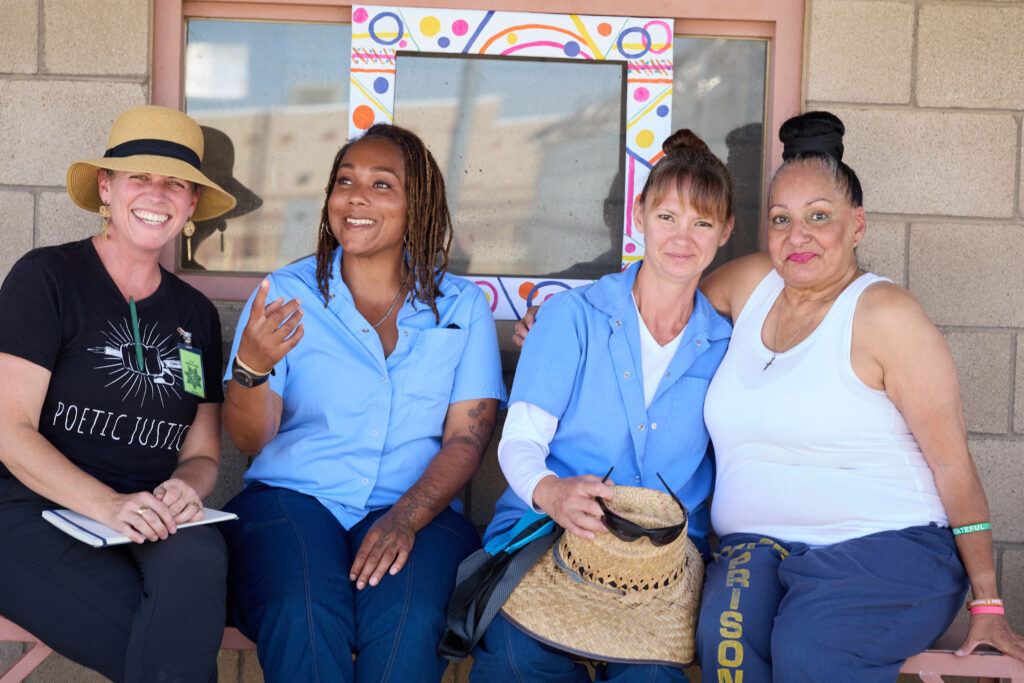
A woman, LC, fidgets in her chair but tentatively raises her hand to share. When she hesitates, members of the group call out, as they always do, “Go ahead!” “We’re gonna love it!” and “We got you.” So, she begins to read the “Definition Poem” she wrote in class during a creative freewriting exercise where she was invited to define what the word “awkward” means to her.
from Awkwardivity, by LC
stripping down in front of a stranger
bending over and spreading my cheeks
taking a poo right next to my bunkie
showering in the open
being only known as my last name
being watched like an animal at the zoo
laundry day
having a medical appointment with a crowd
waiting for pads, tampons, or new underwear
After time we learn to deal, but is that really the way it
should be? Don’t we deserve some privacy?
The room falls silent. And then erupts in a chorus of agreement. They begin telling their own stories of humiliation and degradation, of guards forcing them to wait for their laundry without any clothing on, and of cavity searches despite their histories of physical and sexual abuse. But ultimately someone asks the poet to re-read her last lines: After a time, we learn to deal, but is that really the way it / should be?–a line of poetry that gets right to the heart of this system in which women and gender-diverse individuals are incarcerated and consequently subjected to systematized punishment, despite being, in the case of 60% of incarcerated women/LGBTQ+ persons, still awaiting trial and therefore presumed innocent before proof of guilt.1 And for those who have been charged with a theft, a drug deal, a DUI, or, even in the case of a small percentage of incarcerated women, a violent crime, is there ever a justification for the tactics described in LC’s poem? Should we, as a society, ever eschew the guiding spirit of generosity that encourages us to seek all forms of liberation from oppression (Luke 4:18)?
At the end of each Poetic Justice class, participants are invited to comment on the workshop, and that day one woman said, “Hearing LC read her poem tapped into what I’ve never told a therapist. She said the words, I felt them at the bottom of myself. When I find words for what dehumanization looks like, I am human again.”
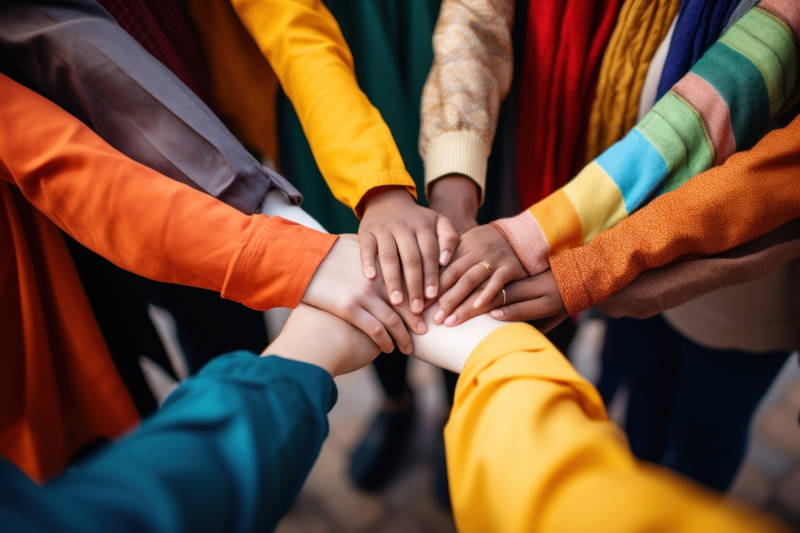
We then close class, as we always do, with our hands held in our transformative circle. We repeat the following community affirmation three times because healing, restoration, and conversion are part of an ongoing process: the first call-and-response is a promise to ourselves, the second is a pact with one another, and the third is spoken so the whole world can hear it.
I have a voice. I have hope. I have the power to change my world.
Hope
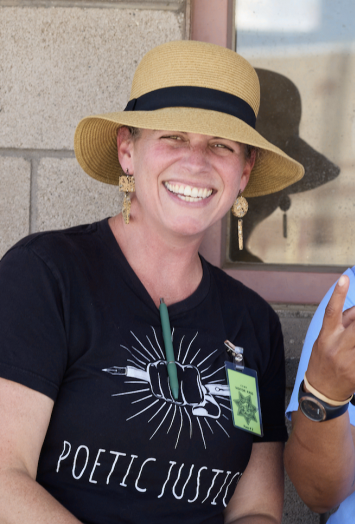
I am the program director for the California chapter of Poetic Justice, a U.S.-based nonprofit with a mission to offer restorative writing and creative arts programs to individuals who are or have been incarcerated in women’s prisons, jails, and youth facilities. With ten years of experience serving about 800 people a year in four states, including Oklahoma, California, Oregon, and Massachusetts, our organization has witnessed the ways in which the healing process of writing is rooted in the practice of imagining a world no longer guided or guarded by trauma. Traumatic experiences will never go away for our participants, but those nightmares may–through gender-responsive approaches to creative thinking and writing—become transformed and transcendent aspects of their full humanity, as James Pennebaker’s ground-breaking and replicated research has proven.2 Pennebaker found that writing about traumatic experiences for just 15 – 20 minutes a day over several consecutive days can lead to measurable improvements in physical health, immune function, and emotional well-being, primarily by helping people organize and make sense of chaotic, distressing memories rather than become overwhelmed by them.
In my six years of work alongside incarcerated people, ages 13 – 85, I have learned that time, trust, and community make it possible for participants to begin to tell their whole story. And for most it is a story that begins with scarcity, violence, neglect, mental illness, and other life-altering events that completely overwhelm the brain’s cognitive and linguistic processing, causing fight/flight/freeze responses.3 90% of people in women’s carceral facilities are trauma survivors, and trauma mutes neural language centers, making it hard to find words for what happened.4 But memory returns to us like poetry–fragmented, sensory, and brief. Poetry, therefore, is an excellent tool for restoring neural pathways because it invites us to re-story the narrative. This active decision to participate in one’s personal retelling reduces the body’s response to triggers while providing the language necessary for facing the harm they have caused (and the associated shame) along with the root causes of harm they have survived.5
The central problem remains however: a punitive prison system, originally created by and for men, is deeply threatening and psychologically damaging for people in women’s facilities. “Safety” protocols include shackling, strip and cavity searching, physical abuse, verbal dehumanization, room searches, restraint, indentured servitude, and intentional unpredictability.6 These security measures are deliberately painful, embarrassing, and dehumanizing for anyone who has ever had the misfortune of experiencing arrest and/or incarceration, but due to the specific risk factors faced by women, gender-diverse individuals, and girls, the ongoing impacts of these protocols function differently for them because they worsen outcomes by triggering responses to past abuses.
According to many of our participants, a visitation day with their children also means they will be stripped and cavity searched, which can lead to the dissociative survival tactics they used when they were assaulted in the past, or, for some, they choose not to schedule visits if it means they will be forced to undergo a state-sanctioned physical violation. It’s important to note here that due to international guidelines on the treatment of incarcerated people, most visitation rooms utilize x-ray machines (like the airport), but in a number of women’s prisons, strip searching continues.
Let’s pause now for a few mindful breaths.
In moments of high-anxiety, our facilitators will often suggest that the class return to the breath, grounding the nervous system and giving us strength for what must come next. Please feel free to complete a few nourishing breath cycles before coming back to this challenging topic.
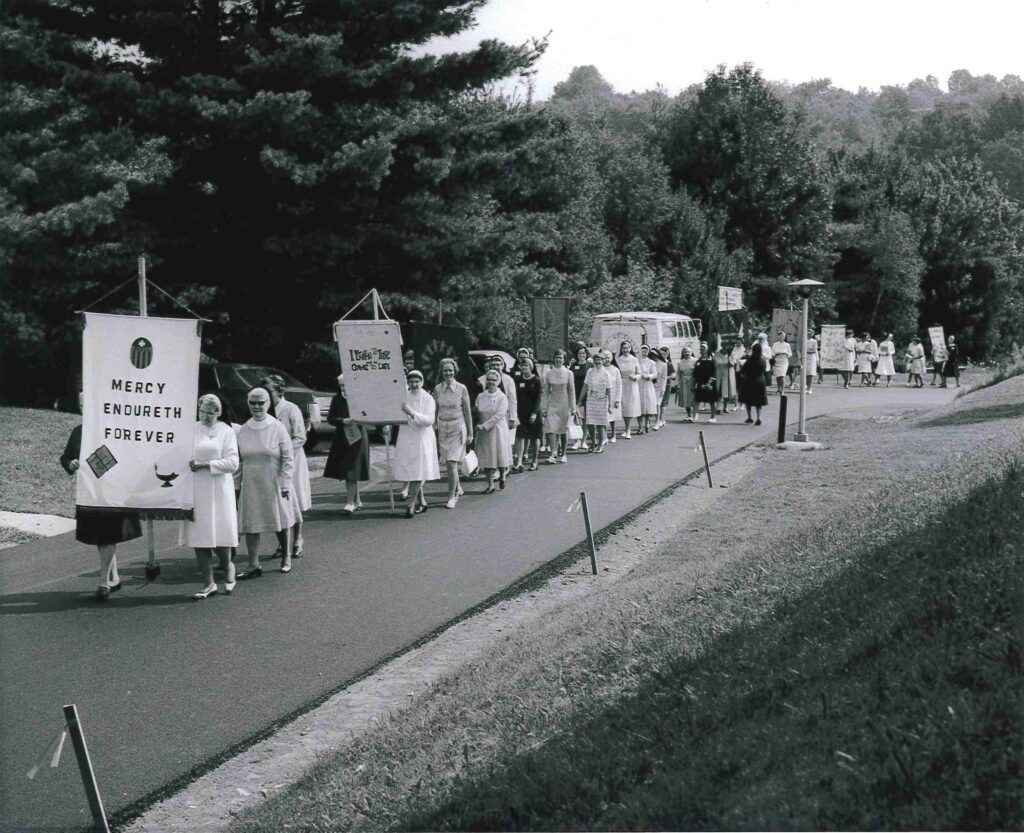
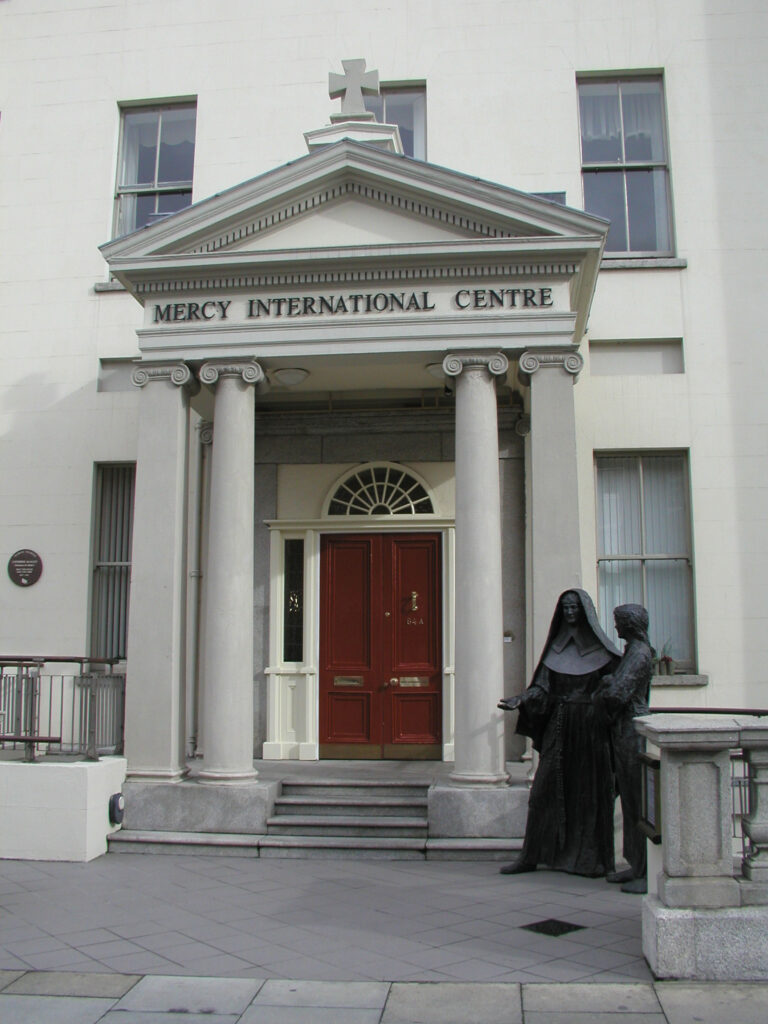
As the Sisters of Mercy are called to a particular concern for women, it is important to consider the broader view of the central problem of retributive punishment because, despite the system’s claim to moral authority, a number of broken systems failed our participants way before their own personal failures caused their incarceration (John 8: 3-11). The Catholic tradition calls for us as a society to prioritize and protect vulnerable communities in prison (Matthew 25:36). Take, for example, one Poetic Justice poet who was sexually assaulted as a young girl by an older man. Add to that a public education underfunded by nearly nonexistent property taxes, a single parent working multiple jobs, endemic community-based violence, daily hunger . . . and then one day she meets a guy who promises an alternative to the pain. But he too comes from broken systems and ends up physically abusing her within an inch of her life. At her trial, the over-worked public defender neglects to submit evidence of the 37 calls she made to 911 over a five-year period.
In the eyes of the law, an act of self-defense is still murder if the abuser dies.
So, she eventually ends up in a Poetic Justice class in the state prison where our formerly incarcerated and system-impacted facilitators create the gender-responsive space that makes post-traumatic transformation possible. But outside of that two-hour weekly window, she will live with metal doors slamming, chains, aggressive physical restraint with impunity, vile and unhealthy food, and solitary confinement if she asserts any sense of human dignity or worth.
Change
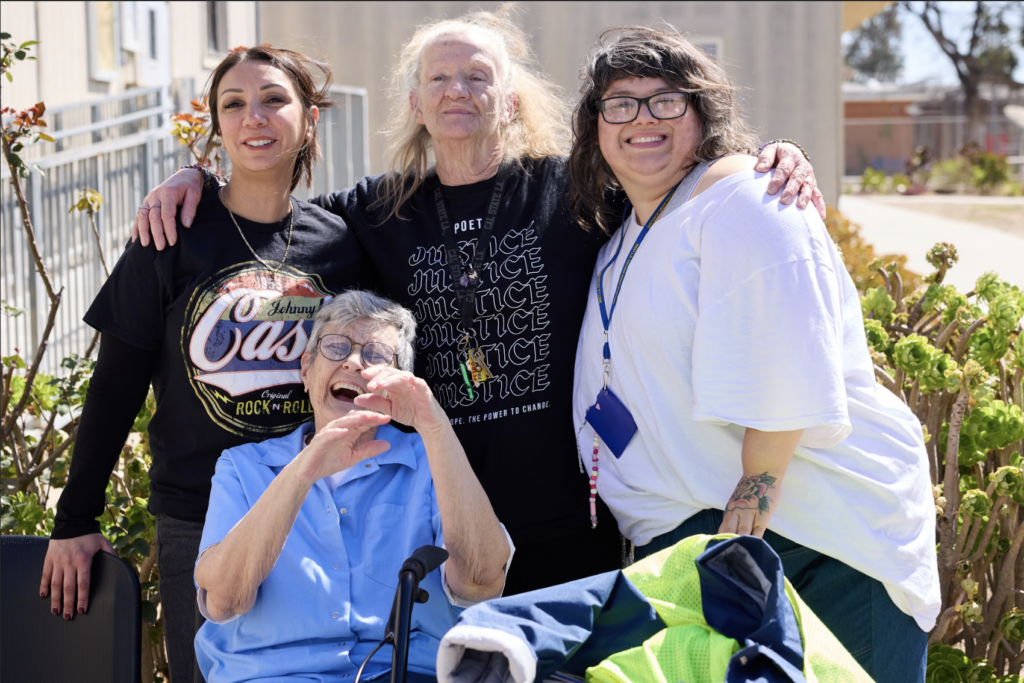
 The U.S. carceral system today is built upon the false premise that certain groups of people deserve interminable punishment and isolation. The first U.S. prison ever designed for solitary confinement was built and operated by Quakers in 1829, but in less than ten years, they began speaking out against “deprivations inherent in being completely alone for so long a time.”7 The Quakers also called particular attention to the suicides occurring in women’s prisons as a result of long-term isolation. Even though the practice was developed as an alternative to execution or public torture, it quickly became clear that solitary, also called the SHU (solitary housing unit), causes and/or increases mental illness, especially among women, one in four of whom “meet the criteria for lifetime serious mental illness (SMI), post-traumatic stress disorder (PTSD), and substance misuse disorders.”8
The U.S was one of only a handful of other countries that did not adopt the “Bangkok Rules,” developed in 2010 by the U.N. Office on Drugs and Crime to create a set of gender-responsive and trauma-informed standards by which countries incarcerate women. While at the 2025 International Corrections and Prisons Association’s first Women in Corrections conference, I learned from a panel of prison administrators that the U.S. is the only high-income country that staffs its prisons and jails with a militarized group of correctional officers rather than social workers and mental healthcare specialists, and that the Norway Model,9 considered a leading design-protocol for effective rehabilitative carceral settings, has been largely rejected in the U.S. for dehumanizing tactics that leave incarcerated people–especially women and gender-diverse individuals—less adaptive and prosocial than they were when they were arrested.10
But they are you and me. And we
are funny and lost and tattooed and
weird and cooler than me and
messed up and lonely and friendly.
Elderly and talented and kind and
busy and worried.
We are also moms
who desperately miss our children.
Or we are
A girl who was dropped off
by her own mom at a group home
where she learned that smoking PCP
was easier than facing her mother’s
inexplicable actions.
A woman who drank a martini at lunch,
crashed the car,
killed her child and now spends
her days thinking about why she
survived and what it means to
make a life in the aftermath of
such breathtaking destruction.
A woman who tried to take
her own life with a gun while
being beaten by a boyfriend, but
the boyfriend got in the way
of the bullet.
We are people with guns
held to our heads,
guns held to our kids’ heads,
guns pointed at us by parents,
boyfriends, and strangers
on the other side of gang wars
guns, protected by our 2nd Amendment,
despite the fact that no one
is protected from them.
People who don’t speak English.
People who get one blanket,
no matter the temperature.
People who are poor and cannot afford
the defense teams afforded
by the American president.
People who are punished every day
for the rest of our lives,
for the worst day of our life.
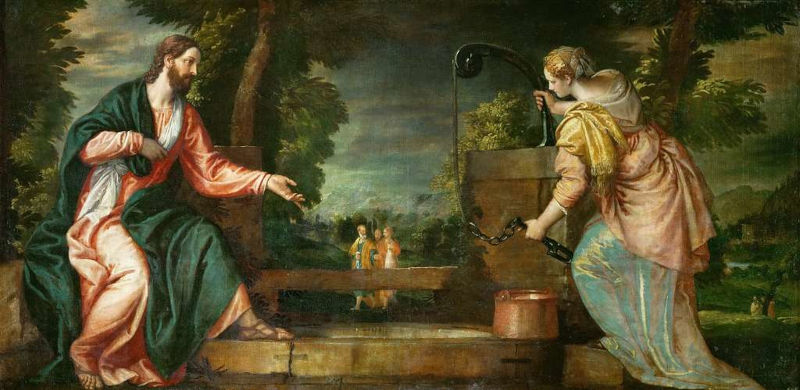
As in the case of Mary Magdalene, one wonders what genius, what potential, what generous gifts to us all are lost when women are interminably silenced and punished rather than renewed and forgiven.
The story of the U.S. carceral system (and we haven’t even touched upon the disgraceful tactics used in immigration detention centers) is as old as the story of oppression, enslavement, and power. Why, for example, do California taxpayers spend $106,000.00 annually to incarcerate just one of the 91,700 people in California state prisons today, rather than invest that $9.7 billion in our most disenfranchised communities? Why did Prop 6, which would have “eliminated the constitutional provision allowing involuntary servitude for incarcerated persons in California,” not pass in 2024?11 Why are the correctional officers who are involved in ongoing DOJ investigations into class action allegations of sexual assault in both of the two women’s prisons in California the same people escorting incarcerated plaintiffs to and from depositions in that very case?12 Why was it possible at the Federal Correctional Institution (Dublin, CA) for sexual assault culture to become so problematic that rather than stop the “rape club,” B.O.P. closed the facility and scattered 600 traumatized women to facilities around the country, far from their families?13
One answer is that the system is not in fact ineffective–it’s doing what it was always intended to do. According to a 2022 ACLU report, indentured incarcerated laborers produce 11 billion in goods and services for the American market, including stores like Target, Walmart, Whole Foods, and Costco, so while the 1935 Ashurst-Sumners Act makes it illegal to transport goods from “convict labor” across state lines, there’s an exemption for agricultural commodities that amounts to millions of dollars in profit that incarcerated folks never see.14 The system was created to use and punish, and by those metrics it is working just fine.
But Poetic Justice and hundreds of other nonprofits will continue to respectfully disagree, advocating instead for the voiceless, because we believe it is our democratic duty to seek solutions through radical compassion. The following are some of the priorities of community-based organizations like Poetic Justice that provide direct service to people in women’s prisons and jails.
- Train correctional staff. Most jails and prisons are not gender-responsive or trauma-informed. In other words, the militarized staff is not aware of the histories or needs of justice-involved women, nor do they receive professional development in mental health or social work practices.15 They too are part of an oppressive and traumatic system, and that results in higher rates of PTSD and suicide for corrections officers than other law enforcement.16 A trained, sworn staff and a reduction in taboos around therapy create healthier environments that redound to the people they are incarcerating.
- Transform facilities. Reimagine “detention” as a welcoming environment that intentionally promotes safety, respect, and human dignity. Ensure that policies, practices, and programs are “relational and promote healthy connections to children, family, significant others, and the community.”17 In addition to safe access to their children and loved ones, provide folks in women’s facilities with socioeconomic opportunities that will improve their living conditions and make it possible for them to thrive after their return to society. They currently receive about $0.30/hour for mandatory labor that does little to prepare them for occupational success upon parole.
- Expand diversion alternatives. Between 1980 and 2024 the number of incarcerated women and girls increased by 624% in the U.S., from 23,326 to 190,600, due to a shift away from mental health treatment for drug and alcohol dependency and toward punitive approaches.18 In fact, according to the San Diego Sheriff’s department (the locale where Poetic Justice California is based), the largest mental healthcare provider in San Diego is its jail system.
- Provide gender-responsive legal aid. Women’s criminogenic pathways tend to involve a close personal relationship, also known as “the girlfriend problem.“19 They are terrified to betray their loved one (or, in so many cases, their abuser), but prosecutors use tactics, including threats of child separation, to coerce them into providing information about their co-conspirators and/or taking plea deals to reduce the time away from their children. 67% of Poetic Justice participants are mothers who were the primary caregivers prior to their arrest, so they will often admit to actions of which they are not guilty if it allows them to return home before they lose parental rights (the Adoption and Safe Families Act requires agencies to terminate their rights as a parent if the child has lived in foster care for 15 of the last 22 months).
- Increase access to gender-responsive and trauma-informed programs on the inside. In a meta-analysis of 71 studies, researchers found that fully gender-responsive programming that acknowledges gendered criminogenic pathways, intervention, context, and content “significantly reduced recidivism rates” compared with the gender-neutral programs. In fact, recidivism rates were reduced by 42% for participants in fully gender-responsive programs.20
We Have a Voice, We Have Hope, We Have the Power to Change Our World
I’d like to close with the words of one of our incarcerated communities– a group of people in a women’s prison outside of Los Angeles—who each contributed their thoughts to the question What does poetry mean to you?
A Letter, by the Poetic Justice Incarcerated Advisory Board at CIW
Our expertise in the art form and craft of writing poetry
comes from our backgrounds. The wisdom of poetry is fundamental
to the cultural groups we come from. It is in our music and our prayer.
It is the most efficient way to send a kite (mail inside a prison),
and the quick scrawl on a wall to say I was here.
I was here.
We get limited characters per secure message so we survive
because of our poetry skills –
the way we say I love you to our children –
the stories we tell about our lives –
All read by the corrections department.
So we use metaphor.
We create symbols with words and we say what needs to be said in the quick lines we
are given.
Poetry is survival.
By taking part in Poetic Justice classes, we have learned to wield language as a tool for
addressing the unspeakable. When one of us is incapable of saying it aloud, a facilitator
will gently encourage:
Can you read the first line?
Can you say the first word?
and like Genesis, we begin to name what happened,
how it shaped us,
how it plagues us,
and where we hope we can go from here.
Where there was no light, now there is light.
Slowly, we speak into existence the abuse, the abandonment, the drugs, the numbness,
the feeling of being shackled to a bed while giving birth only to have our baby taken
from our arms while we first learn to feed one another.
We are still so locked away.
The words get locked away too.
And this is what poetry can do.
It can give me back to you.
Acknowledgements
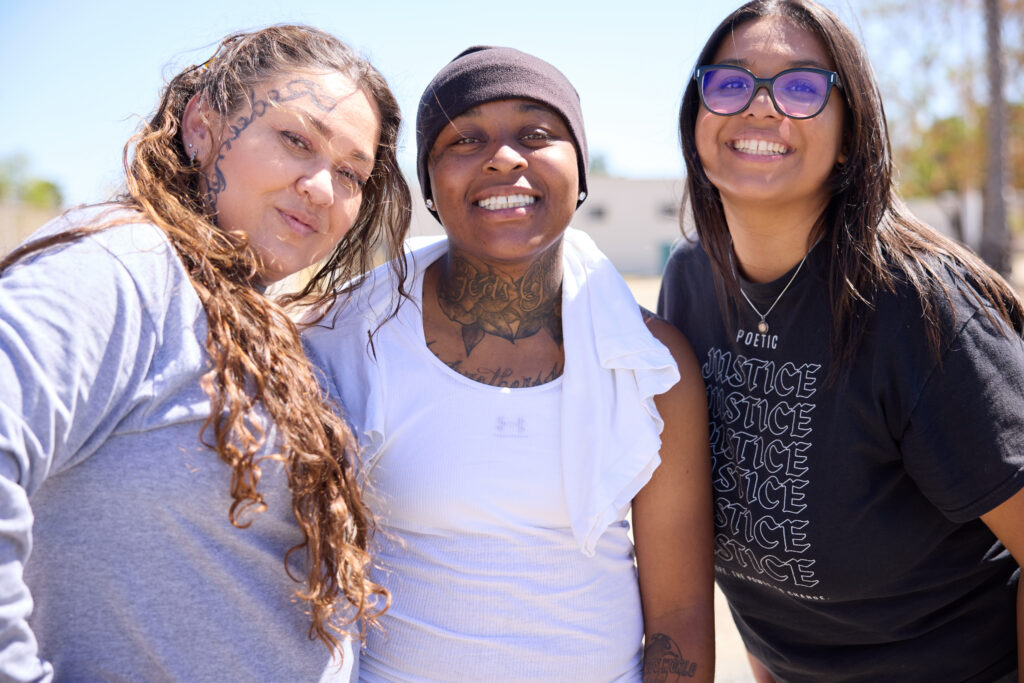
I would like to thank those who contributed their wisdom and their experiences to this project: Katie Wilson, André McFall, and the members of the Poetic Justice Community who give us voice, remind us to hope, and imbue us with the power to change our world.
Notes:
- Aleks Kajstura and Wendy Sawyer, “Women’s Mass Incarceration: The Whole Pie 2024,” The Prison Policy Initiative, 2024, https://www.prisonpolicy.org/reports/pie2024women.html.
- James Pennebaker and Joshua M. Smyth, Opening Up by Writing it Down: How Expressive Writing Improves Health and Eases Emotional Pain (New York: The Guilford Press, 2016), 11.
- Bessel van der Kolk, The Body Keeps the Score: Brain, Mind and Body in the Healing of Trauma (New York: Penguin Books, 2015) 43, 192.
- M.A. Bowles, D. DeHart, and J.R. Webb, “Family influences on female offenders’ substance use: The role of adverse childhood events among incarcerated women,” Journal of Family Violence, 27, no. 12 (2012): 681-686. https://link.springer.com/article/10.1007/s10896-012-9450-4; D. DeHart, “Pathways to prison: Impact of victimization in the lives of incarcerated women,” Violence Against Women, 14, no. 12 (2008): 1362-1381. https://journals.sagepub.com/doi/10.1177/1077801208327018.
- Louise DeSalvo, Writing as a Way of Healing: How Telling Our Stories Transforms Our Lives (Boston: Beacon Press, 2000), 34, 37, 41-42.
- “Women’s Justice: A Preliminary Assessment of Women in the Justice System,” Council on Criminal Justice, Women’s Justice Commission #8 (2024), https://counciloncj.org/womens-justice-a-preliminary-assessment-of-women-in-the-criminal-justice-system; Veronica Filippeschi, “Body searches: a higher risk for women in prison,” The Association for the Prevention of Torture (2023), https://www.apt.ch/news/body-searches-higher-risk-women-prison.
- Ruth Flower, “Solitary Confinement and Quakers,” Justice Refore – The Friends Committee on National Legislation (2020), https://www.fcnl.org/updates/2016-09/solitary-confinement-and-quakers.
- Shannon M. Lynch, Dana D. DeHart, Joanne Belknap, and Bonnie L. Green, “Women’s Pathways to Jail: Examining Mental Health, Trauma, and Substance Use,” Bureau of Justice Assistance Policy Brief, U.S. DOV NCJ 241045 (2013), https://bja.ojp.gov/sites/g/files/xyckuh186/files/Publications/WomensPathwaysToJail.pdf.
- Jay Inslee, “How Norwegian prisons prepare inmates to become better neighbors,” Medium (2022), https://medium.com/wagovernor/how-norwegian-prisons-prepare-inmates-to-become-better-neighbors-534409a90f33.
- Elizabeth Fleming, Allison Upton, Felicia Lopez Wright, Sarah Wurzburg, and Becki Ney, “Adopting a Gender-Responsive Approach for Women in the Justice System: A Resource Guide,” The Council of State Governments Justice Center (2021),
https://csgjusticecenter.org/publications/adopting-a-gender-responsive-approach-for-women-in-the-justice-system-a-resource-guide/. - Prop 6: “Eliminates Constitutional Provision Allowing Involuntary Servitude for Incarcerated Persons. Legislative Constitutional Amendment.” Legislative Analyst’s Office, California Legislature’s Nonpartisan Fiscal and Policy Advisor (Ballot, November 2024), https://lao.ca.gov/BallotAnalysis/Proposition?number=6&year=2024.
- DOJ Office of Public Affairs Press Release: “Justice Department Announces Civil Rights Investigation into Correctional Staff Sexual Abuse at Two California Prisons,” 24-1097 (2025), https://www.justice.gov/archives/opa/pr/justice-department-announces-civil-rights-investigation-correctional-staff-se xual-abuse-two.
- DOJ Office of Public Affairs Press Release: United States Attorney’s Office Northern District of California, “Two More Dublin Federal Correctional Officers To Plead Guilty to Sexually Abusing Multiple Female Inmates,” 14.7 (2025), https://www.justice.gov/usao-ndca/pr/two-more-fci-dublin-correctional-officers-plead-guilty-sexually-abusing-femal e-inmates.
- Dani Anguiano, US prison workers produce $11bn worth of goods and services a year for pittance,” American Civil Liberties Report (2022), https://www.theguardian.com/us-news/2022/jun/15/us-prison-workers-low-wages-exploited: Sandeep Singh Dhaliwal, “The Criminal System Under Racial Capitalism,” UC Davis Law Review, 58 (2025): 69, https://lawreview.law.ucdavis.edu/archives/58/3/criminal-system-under-racial-capitalism; Margie Mason and Robin McDowell, “Prisoners in the US are part of a hidden workforce linked to hundreds of popular food brands,” The Associated Press (2024), https://apnews.com/article/prison-to-plate-inmate-labor-investigation-c6f0eb4747963283316e494eadf08c4e.
- Nena P. Messina, Barbara E. Bloom, Stephanie S. Covington, “Gender-responsive approaches for women in the United States” The Routledge Companion to Rehabilitative Work in Criminal Justice, DOI:10.4324/9781315102832-57 (2019) 638-640, www.stephaniecovington.com/site/assets/files/3477/routledge_gender-responsive_approaches_for_women_in_the_united_states_final.pdf.
- Michael D. Denhof and Caterina G. Spinaris, “Depression, PTSD, and Comorbidity in Corrections Professionals,” Florence, CO: Desert Waters Correctional Outreach (2013), 14-15 & 35-36, https://perma.cc/UZ8A-LXNN.
- Stephanie S. Covington, Ph.D., L.C.S.W. and Barbara E. Bloom, Ph.D., M.S.W., “Gender-Responsive Treatment and Services in Correctional Settings,” Inside and Out: Women, Prison, and Therapy (2006), 9-33, stephaniecovington.com/site/assets/files/3482/finalc.pdf.
- Kristen Budd Ph.D., Dinesh Napal, and Joshua Rovner, “Incarcerated Women and Girls,” The Sentencing Project (2025), https://www.sentencingproject.org/fact-sheet/incarcerated-women-and-girls/.
- American Civil Liberties Union (Lenora Lapidus, Namita Luthra, and Anjuli Verma); Break the Chains: Communities of Color and the War on Drugs (Deborah Small); The Brennan Center at NYU School of Law (Patricia Allard and Kirsten Levingston), “Caught in the Net: The Impact of Drug Policies on Women and Families,” (2025), https://www.aclu.org/files/images/asset_upload_file431_23513.pdf.
- Richard Summers, Simon Pemberton, and Joanna Long, “Examining the Effectiveness of Interventions for Criminal Justice-Involved Women: A Meta-Analytic Review,” Criminal Justce and Behavior, 52, no. 5, www.birmingham.ac.uk/documents/college-social-sciences/social-policy/women-crime-justice/summers-et-al-2025-examining-the-effectiveness-of-interventions-for-criminal-justice-involved-women-a-meta-analytic.pdf.

image credit: All images provided and used with permission by author.