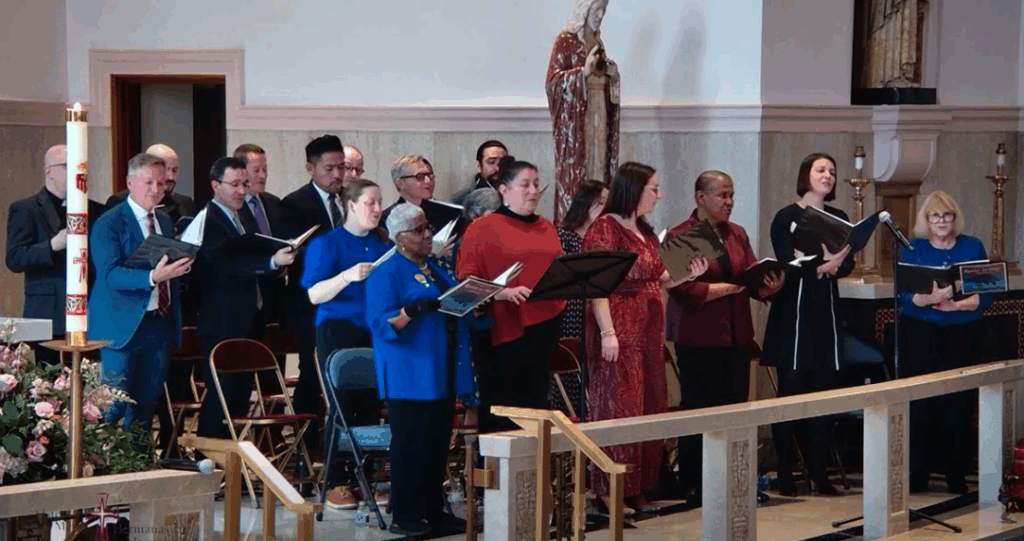

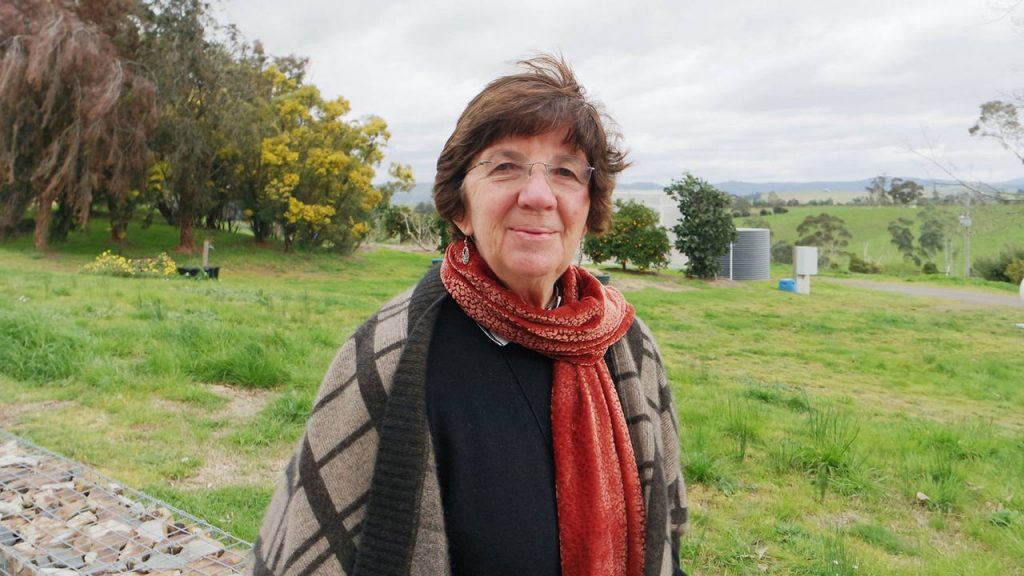
“Family, friends, Mercy sisters, colleagues, and students sing her praises.”
Elaine Mary Wainwright was born into a farming family at Umbiram near Toowoomba in Queensland, Australia, on August 25, 1948. She grew up in the weatherboard house that her father helped to build from trees on the property. She was the first of six children, a loving sister to three girls and two boys. In that context, Elaine first learned what it means to be a valiant woman. She learned to “rise while it was still dark” and to make the most of every waking moment for the sake of the Earth community, a practice she maintained for most of her life to extraordinary effect. Her parents, Kathleen and Tom, passed on to Elaine a love of the earth and of the life it sustained. Their own childhood experience of struggling with the exigencies of farming life was embedded deeply in the psyche of their eldest child who, for many decades, engaged her hands, her head, and her heart in the interests of transformation.
Elaine’s first encounter with the Sisters of Mercy was at her local Catholic Church in Drayton. The Mercy Sisters from Toowoomba would accompany the parish priest to the country parish and teach catechism to local Catholic children who attended the Umbiram Primary School during the week. For her secondary schooling, Elaine boarded at St. Saviour’s College, Toowoomba, a Mercy School staffed by the Sisters of Mercy of the Brisbane Congregation. She graduated from St. Saviour’s College in 1964 as dux of the college at the age of 16 then spent two years at Kelvin Grove Teachers’ College in Brisbane where she gained a Certificate of Teaching (Secondary) and emerged once more as the top student. Elaine went on to teach at Quinalow Secondary School before joining the Sisters of Mercy in Brisbane in 1968 and immersing herself in the Mercy spirit that was to inform her way of being in the world for the next 56 years.
I met Elaine for the first time in May 1976 when I spent a week with the Sisters of Mercy in Brisbane exploring the concept of “mercy” in the biblical tradition. Elaine was then 15 months into her role as mentor of young women seeking to throw in their lot with the Sisters of Mercy and three months into a Bachelor of Arts (Hons) degree at the University of Queensland, which she completed in 1980 with a thesis on biblical hermeneutics. She was combining her studies and her role as formator for the Sisters of Mercy with lecturing in the Brisbane Archdiocesan Formation Program. Elaine and I often recalled that our conversations during that week in 1976 were about the raḥamîm (the womb compassion of God) and the ḥesed (the loving kindness or steadfast love) at the heart of the “mercy” charism that was the focus of the sessions and that was to sustain us both through the diverse phases of mercy ministry to come. During that week, we also discussed the many possibilities that might be open to Elaine for exploration of the biblical world and the biblical text. Elaine’s research and her role in the academic world were to take her far beyond what either of us imagined at that time. The same can be said of her contribution to the Brisbane Mercy Congregation, to the Institute of Sisters of Mercy of Australia and Papua New Guinea (ISMAPNG), and to the Mercy International Association (MIA). Elaine was a key contributor to the Mercy theological reflection processes which have been crucial to discernment of appropriate action for justice and mercy in our institute and in our Mercy organizations. Bringing global and local issues into dialogue with the biblical tradition for the sake of transformative action was Elaine’s particular area of expertise. She was to bring this approach to her role as ISMAPNG Executive Director of Mission and Ministry (2016 – 17).
As I reflect on the unfailing friendship that followed my 1976 encounter with Elaine, it is clear to me that there was a deep resonance between her commitment to a Mercy way of life in the tradition of Catherine McAuley, established in early nineteenth-century Dublin, and the academic path that was to be the main focus of her ministry as a Sister of Mercy in the decades that followed. Every undertaking of this valiant woman of mercy was, from the outset, for the sake of transformation in an increasingly troubled world, so much at the heart of the Mercy tradition over the years. What follows is little more than a glance at Elaine’s contribution to biblical scholarship, in general, and to feminist biblical scholarship and ecological biblical scholarship, in particular. It is in no sense a comprehensive account of her achievements in the field. It is simply a close friend’s attempt to honor her as colleague, friend, and valiant woman of mercy whose goal was transformation and to provide some context for the selection of her writings that follows.
For two decades (1981 – 2001), Elaine’s academic home was the faculty of St. Paul’s Theological College, Pius XII Seminary in Banyo, the Catholic member college of the Brisbane College of Theology. In the early eighties, Elaine also lectured in Biblical Studies at the McAuley Institute of Catholic Education and, from 1987 until 1990, she designed, taught, and assessed a variety of diploma-level courses at the Institute of Faith Education in Brisbane. As a visiting Fellow, from 1998 until 2002, at Griffith University School of Theology (also affiliated with the Brisbane College of Theology), Elaine worked across diverse disciplines. She was intent on being at the cutting edge of higher education research available through the Griffith Institute of Higher Education. In this context she supervised students who were undertaking Honors, Masters, and Doctoral research and provided a regular colloquium for students doing research in feminist theology. It was no surprise when the Postgraduate Student Association of Griffith University awarded Elaine their Medal for Excellence in Supervision.
During the 1980s, Elaine interspersed academic and other commitments with graduate studies in a variety of contexts: at Catholic Theological Union in Chicago where she gained a Master of Arts in Theology (1985); at the École Biblique et Archéologique Française de Jérusalem (1985 – 86) where she achieved the award of Élève Diplômé (1986); and finally at the University of Queensland where, in 1990, under the direction of Professor Michael Lattke, she completed her PhD thesis that was to be published the following year as Towards a Feminist Critical Reading of the Gospel of Matthew (de Gruyter, 1991). During her time as a student in Jerusalem, Elaine combined work on her thesis with participation in sessions for regular Ecole students and the teaching of biblical studies at the Ecce Homo Centre for Biblical Formation where she engaged adult participants from diverse cultural backgrounds. She would offer yet another short-term course at Ecce Homo in 2001 during her time as Catholic Biblical Association of America visiting professor at the Ecole Biblique. Lecturing, researching, and engaging in ecumenical and cross-cultural environments was key to Elaine’s expansive and all-inclusive approach to her ministry and to her whole way of being. All were welcome: people of diverse cultures or faiths and those of no religious faith formed her circle of colleagues, students, and friends.
Elaine’s doctoral thesis was a landmark achievement in that it constituted the first full-length feminist commentary on a Christian gospel. In the introduction to her thesis, Elaine notes the now obvious truth that “no scholarship is objective and value-neutral” but is “on behalf of.”1 In the case of her study of Matthew, it was undertaken explicitly “on behalf of women: toward the future of the ‘church of women’; for the sake of transformation of the Christian traditions; and for the more careful articulation of the biblical word as the liberating word of God.”2 Elaine used the expression “church of women” in much the same way as we speak of the “church of the poor” as a church that embraces “the poor” and restores them to the centre from which they have been excluded. “Transformation” was Elaine’s explicit goal from the outset and her scholarly contribution to that goal is among the most remarkable to be found in any field of endeavour. Her scholarship “on behalf of women” was paralleled by her mutually-enriching and long-term membership in organisations such as WomenChurch, WATER (Women’s Alliance for Theology, Ethics, and Ritual) and WSRT (Women Scholars in Religion and Theology).
A sabbatical year (1993 – 94) as visiting scholar at Harvard Divinity School and residency at the neighbouring Episcopal Divinity School provided Elaine with opportunities to engage anew with a vibrant community of internationally recognised feminist scholars, including Elisabeth Schüssler Fiorenza, Carter Heyward, Joanna Dewey, Satako Yamaguchi, and Doris Strahm. It was in this context that she began work on her second monograph, Shall We Look for Another? A Feminist Rereading of the Matthean Jesus (Orbis, 1998), developing her feminist hermeneutic and socio-rhetorical methodology, now named as an “engendered reading,” to key passages from Matthew’s gospel (1-2; 11:1-30; 15:21-28; 16:13-20; 27:32-28:20) and continuing the work of “creating a map for a feminist reading of the Jesus of the gospels, as well as actually beginning such a reading.”3
The new millennium opened up new possibilities for Elaine and for the creative expansion of her work in eco-feminist biblical scholarship. The focus of Elaine’s transformative scholarship and community engagement was to move in the direction of a whole-hearted embrace of the more-than-human Earth community. The ecological hermeneutic that informed her subsequent work encompassed the human and the more-than-human in their “inter-con-textuality” while at the same time presupposing the feminist hermeneutic of suspicion, the feminist hermeneutic of reclamation, and the socio-rhetorical methodology that she had already brought to her teaching and writing. In her 2017 tribute to Seán Freyne, long-term friend and mentor since undergraduate days, Elaine states explicitly that “two reading perspectives [feminist and ecological], infused also with a critical postcolonial optic, have characterized my biblical career.”4 In this context, she credits Seán with being among those who influenced the development of her ecological approach to the text, albeit with somewhat different emphases from hers.
In 2003, Elaine became inaugural Head and Richard Maclaurin-Goodfellow Professor of Theology in the newly established School of Theology at the University of Auckland in Aotearoa New Zealand, a position she held with distinction until 2014. Her appointment to these roles marked a defining moment for Elaine and for those who were privileged to have her as their teacher and/or mentor. Of the 19 doctoral students whom Elaine supervised over the course of her career, 11 successfully completed their research during her time in Aotearoa New Zealand. Her doctoral students were to carry forward her legacy in ecological hermeneutics even as they continued to bring their own unique contributions to biblical scholarship in Oceania and beyond. Two of Elaine’s former doctoral students, Robert J. Myles and Carlos Olivares, authored with her the Phoenix Study Guide to the Gospel of Matthew which was published in 2014 under the title, The Gospel According to Matthew: The Basileia of the Heavens is Near at Hand.
Elaine was for many years an active member of the Society of Biblical Literature (SBL), the Catholic Biblical Association of America (CBA), the Society for New Testament Studies, and the Australian Catholic Biblical Association (ACBA). She joined the Society of Asian Biblical Studies (SABS) when it was established in 2006. From 2002 to 2006, she chaired the Matthew Section of the SBL, and from 2004 to 2012, she served as Chair of the Australian and New Zealand Society of Theological Schools (ANZSTS). Notable among her achievements on the international stage was her prominent role in hosting the SBL International Meeting in Auckland in 2008. She later served as chairperson for the Ecological Hermeneutics Section at the SBL Annual and International Meetings. Her Earth Bible commentary, Habitat, Human, and Holy: An Eco-Rhetorical Reading of the Gospel of Matthew, was the focus of a review session at the 2016 SBL meeting. Elaine’s memory and her contribution to ecological hermeneutics was honored at the 2025 SBL meeting in Boston, Massachusetts.
Yet another ground-breaking Wainwright publication, Women Healing/Healing Women: The Genderization of Healing in Early Christianity (Equinox, 2006), was taking shape during the early years of Elaine’s time in Auckland. From her scholarly focus on the healing activity of Jesus of Nazareth in the gospels where no woman is said to heal and no woman is commissioned to heal, we find Elaine shifting in Women Healing to a new and engaging exploration of the healing activity of women in the Graeco-Roman world, in general, and in early Christianity, in particular. As was her wont, Elaine acknowledged those who raised the challenging questions and encouraged her research, singling out for special mention her graduate students. While most authors acknowledge their mentors, this valiant and ever so humble woman was always quick to credit with a contribution to her work those whom she herself mentored.
One of my most treasured memories is of the days Elaine and I spent together reading and discussing James Crossley’s and Robert J. Myles’s, Jesus: A Life in Class Conflict (zer0 books, 2023). Her interest in the work and her pride in the success of her former student Robert was palpable, despite her failing health. I was to witness the same sense of pride at the launch of Habitats of the Basileia: Essays in Honour of Elaine M. Wainwright (Sheffield Phoenix, 2024), to which so many of her former students contributed. Pride in her students was of course coupled with Elaine’s deep appreciation of her own mentors and the many colleagues and friends who shared her yearning for transformation in the Earth community. To name any of her mentors is to risk omitting some who were significant in this arena, while to name those of whom I am aware is imperative. Notable among Elaine’s mentors who became life-long friends were Seán Freyne (as mentioned above), Donald Senior, CP, Elisabeth Schüssler Fiorenza, Jerome Murphy-O’Connor, OP, and Norman Habel, none of whom need further identification in the world of critical biblical scholarship. No tribute to Elaine would be complete without mention of her friend Barbara Reid, OP, with whom she shared a vision and a passion for biblical scholarship that addressed gender justice and integral ecology in both church and society.
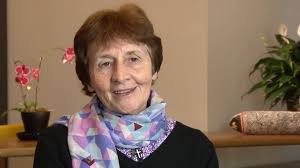
Elaine Mary Wainwright, Sister of Mercy and eco-feminist biblical scholar, died on July 5, 2024. She was a woman of valor whose spoken words of wisdom touched the hearts of the many and whose wisdom-infused written legacy is to be found in four monographs, numerous co-authored and co-edited works, scores of articles in scholarly journals, book chapters, and regular contributions to popular publications such as Tui Motu InterIslands Magazine. It has been a privilege to share with Elaine a commitment to Mercy life and to biblical scholarship for the sake of planetary transformation.
Notes:
- Elaine M. Wainwright, Towards a Feminist Critical Reading of the Gospel according to Matthew (Berlin: de Gruyter Brill, 1991), 7.
- Wainwright, Towards a Feminist Critical Reading of the Gospel according to Matthew, 7.
- Elaine M. Wainwright, Shall We Look for Another? A Feminist Rereading of the Matthean Jesus (Maryknoll, NY: Orbis, 1998), ix.
- See Elaine M. Wainwright, “Weeds and Trees and Galilee: Revisiting Ecological Readings of Gospel Texts in Honour of Seán Freyne,” in Valiant Woman: Words of Wisdom for the Sake of Transformative Action, ed. Elizabeth Dowling, et al. (Adelaide, SA: ATF Press, 2025).
This article was adapted with permission from Veronica Lawson’s Introduction to a collection of Elaine’s writings edited by Elizabeth Dowling, RSM, Anne Elvey, Veronica Lawson, RSM, and Robert Myles, A Valiant Woman: Words of Wisdom for the Sake of Transformative Action (Adelaide, SA: ATF Press, 2025).

image credit: University of Aukland, New Zealand