

When Grief Speaks Before Thought and Endures Beyond Memory
After the first breath is taken, before a word is spoken, there is lament. Imagine the sound of a newborn who cries out in lament as it feels a separation from the comfort of the mother’s womb: chilled air, bright lights, unfamiliar sounds and smells. A wail like no other escapes from the baby’s lips—a sound that will never be repeated, never felt in the same way again. A friend describes this cry of lament as visceral, almost animal-like.
In The Body Keeps Score, Bessel van der Kolk writes about “pre-verbal meaning.” He notes: “Our sensory world takes shape even before we are born. In the womb we feel amniotic fluid against our skin. We hear the faint sounds of rushing blood and a digestive tract at work, we pitch and roll with our mother’s movements. After birth, physical sensations define our relationship to ourselves and to our surroundings . . . a cacophony of incomprehensive sounds and images presses in on our pristine nervous system. These events are shaping us, even as we don’t recall them.”1 This quote is helpful when exploring lamentation as it aids us in understanding lament as a precursor to language as we know it, and yet, also as a language all its own. Lament often precedes words and communicates what words alone cannot. It is unfiltered emotions that others cannot relate to. Try to imagine the worst pain you have ever felt—physical or emotional—and imagine trying to explain this to another. So very often, our friends and family cannot, as much as they desire to do so, begin to imagine what this pain felt like. What words fail to explain, lament communicates clearly.
English professor Elaine Scarry takes this notion one step further by suggesting that profound pain does not merely precede language but actively dismantles it, returning us to the cries and sounds that resemble lament. She states that whatever pain achieves, it achieves in part through its “unsharability.” To strengthen her point, Scarry quotes Virginia Woolf: “English, which can express the thought of Hamlet and the tragedy of Lear has no words for the shiver or the headache . . . the merest school girl when she falls in love has Shakespeare or Keats to speak her mind for her, but lest a sufferer try to describe a pain in his head to a doctor and language at once runs dry . . . physical pain does not simply resist language but actively destroys it, bringing about an immediate reversion to a state anterior to language, to the sound and cry the human being makes before language is learned.”2 Like van der Kolk, Woolf reminds us of a clear understanding of lament which involves mourning, wailing and often a deep sadness.
Sharing this understanding of lament—as something that precedes and at times breaks down language—I find myself unable to write further without acknowledging where my own knowing comes from.
These thoughts have been shaped by my own background and ministry. My writing at this time is shaped by my work as a grief and trauma therapist and as a Sister of Mercy. I shared with someone that this writing feels heavy with personal meaning. I continued to share that while trauma and grief would not be everyone’s first choice of work and lamentation not everyone’s choice of topic, I wonder if they are mine because so much of my story is shaped by grief and trauma and lament? I feel privileged to walk with others through their own stories when I can say to them, “The how or why don’t matter, but I get it!”
There was a meditation written recently by Rev. Cameron Trimble and the title alone sums all of this up beautifully. Her meditation is entitled, “When Lament is the Only Honest Language.” Indeed, lament is about honesty and language, with or without words. The thoughts of honesty and language led me to ask a friend about her thoughts on lamentation. She started by sharing that her psalm of lament is Psalm 124 rewritten by Nan Merrill. It reads in part:
“If it were not for You, O Beloved
You who make all things new,
and chaos would reign in every heart;
In You will I trust forever.
When doubt threatens to overwhelm and separate me,
When anger makes me blind,
Then You, O Merciful One,
Are ever-ready to awaken the holy,
The Sacred within me;
Then do Your living streams of grace enfold me.”3
These words from Merrill help me to feel the guttural pause of lament! The pause that calls me to feel what there are no words for. My friend goes on to say: “I lament so much these days as the values of this administration go against everything I believe in! I mourn civility, empathy, kindness and compassion. I feel disgust for the masculinity and abuse of power on display daily. And now I fear the possible conquest of countries and the raping of resources from our planet/world. Lamenting in order to trust more deeply that evil will not prevail has been challenging to my faith and in the belief that goodness will win.”
There is a section from the Constitutions of the Sisters of Mercy that has always helped to fuel me forward in my vocation as a sister and in my ministry as a Mental Health Counselor. It states: “Mercy regards simply the need of the other. It lifts and supports and gives without measure.”4 This so clearly responds to the needs of our suffering world.
Why Lament?
If lament is the only honest language in times of deep suffering, then the question becomes: what happens when lament is silenced, ignored or quickly brushed over? I have sometimes learned the hard way that lament will not be ignored. It calls us back again and again until it becomes real enough to name.
I am so aware in this writing of how very heavy these days feel: personally, collectively and liturgically (I am writing this article as we move into the season of Lent).
Personally, I’m feeling the “lament of aging,” my own and others. I received a call a few weeks back that it was time to begin applying for Medicare. I remember the emotion I felt hanging up from that call and the questions of how did I get here? And what does this mean? I never expected the reality of “almost 65” to hit as hard as it did. Lament called me to name it! I had to name my own fear of aging, question what have I done with my life and what did I still want to do. I allowed myself to lament that my dad died at 44 and my mom at 75. One I had surpassed and one no longer looked that far off. I struggled with needing more than 10 more years and knowing nothing is guaranteed. It has been a week since that call and there is still a part of me that carries that emotion in my chest. Like lament, it can be difficult to try to explain to others. Also, like lament, it calls me to trust and to hope.
This lament over aging also calls me to look at being a member of an aging community and what that means. How am I personally called to pray for and support our newer members? The “guttural pause” I have referred to earlier as I watch friends in community age and how that shifts our friendship from mutual to caregiving and what the weight of that can sometimes feel like.
As we are all very much aware, aging by its very nature brings about a slow accumulation of losses. We lose the hopes and dreams of our youth, we lose time, identity, independence, perhaps our health, and so much more. These losses come slowly (for the most part) and at times seem too small to even name. There is something about lament though that names them as real losses—lament allows aging to be acknowledged instead of denied. As a religious community we ask the questions of direction, support, where do we place our focus, what are our priorities. These are questions of aging. A friend of mine recently moved and, in this moving, she recognized her own aging process of having to move stuff that had accumulated over many years. She acknowledged how hard it was to go up and down the stairs and to acclimate to new surroundings. And in the end, I could hear her frustration as she said, “There, I’ll say it, I am lamenting this move!” Through her frustration I also heard a sigh of relief: I’ve acknowledged it and now I can move on!
Aging requires lament. It reminds me of the song from Mamma Mia that is rightly called “Slipping Through My Fingers.” Aging, like youth, slips through our fingers. If we fail to acknowledge it, we can risk missing the beauty and joy that can come with it. I spoke of the guttural cry of the newborn—this is not a sad cry, it is a sign of hope. This can be said of the signs of aging. Yes, we are called to lament parts of it but there is also gift that comes with it. One is not mutually exclusive of the other.
Collectively, we are all living in a hurting world. Across political and religious differences, many sense that things are deeply unsettled. There is a quote from J.R.R. Tolkien that reminds me of this time: “The world is indeed full of peril, and in it there are many dark places; but still there is much that is fair, and though in all lands love is now mingled with grief, it grows perhaps the greater.”5 From the very beginnings of our country there has been an understanding that in order for the collective all to succeed we would need to be committed to each other; an ideal of caring, empathy, understanding and forgiveness, to see the suffering of others as our own. As the last line of the Declaration of Independence reads: “we mutually pledge to each other, our lives, our fortunes, and our sacred honor.” This is what has sustained us as a nation along with struggle, sacrifice, and care for the other.
Liturgically, we are coming up to the season of Lent, where we hear the cry of Jesus to the Father, “Take this cup from me,” and, “It is finished.” The Catholic tradition gives us permission to sit in lament, to sit in the meaning of ash and wilderness, a time of waiting. It is a time that takes us to the tomb! Similar to the spirit of lament, which calls us to pause, breathe and return, the season of Lent calls us to sit in a time of abandonment, the darkness of the tomb, the rolled away stone and then resurrection! We are not called to be a people who live in lament, but a people who experience it.
If There Were No Lamenting
If lament lives in our personal stories, in our collective life, and within our faith traditions, then the question remains: what happens when lament is denied or silenced, unwelcomed? At this moment, I can think of no better prayer than what has become known as the Serenity Prayer by Reinhold Niebuhr:
“God, grant me the serenity to accept the
things I cannot change,
the courage to change the things I can,
and the wisdom to know the difference.”
Accepting lament can feel like one of the hardest things we are called to do. Denying it would be so much simpler, but at what cost? We’ve all heard the phrase: “the only way out is through.” We can seldom choose what comes our way, but as the Serenity Prayer says, we can ask to accept what we can’t change and to change what we can. Accepting that which we did not choose means making peace with it. It doesn’t mean being resigned to it. It doesn’t mean ignoring it; it means making peace with it. This peace calls us to a transformation of sorts. It may not be something we have chosen for ourselves or something we would choose for another, but when it seems as though there is no other way out, maybe we can find peace in knowing others have gone before us and found meaning in the suffering. This peace provides a way forward.
The dictionary defines lament as: “to mourn aloud; to express sorrow, mourning, or often regret demonstratively, to regret strongly.” When lament is ignored, so is our pain. If you are anything like myself, you tend to ignore suffering as much as possible. None of us chooses to add unnecessary suffering to our lives. And yet, life is made up of suffering. We suffer the loss of life, the breaking down of our bodies, failure, imperfection, the breakdown of relationships, broken dreams, the list goes on. To choose to not feel or experience this suffering is choosing to not live in the real world. What is the old saying? Does it make more sense to remain stagnant in life so that I don’t risk the pain of failure? I would hope not! Unfortunately, denial to the pain we feel doesn’t really lessen it; it just pushes it away to come back at some other time. If we deny the feeling of loss, we deny the experience of loving another enough that it hurts to lose them. In other words, if I refuse to accept life with its suffering, can I truly feel its joy?
The Work of Lament
Lament speaks the truth. Lament allows a dance to take place between deep pain and hopefulness. It allows them to co-exist, side by side. It is an honest, raw faithfulness that can at times bring us to our knees. It acknowledges our brokenness and speaks of our goodness all at the same time. It is real! This is who we truly are before God and others. The truest pieces of lament are good and right and should be able to be felt freely without reserve, helping us to reconstruct meaning out of suffering. As a therapist, my job is to try to help make meaning out of suffering. Not to excuse suffering, but to help others find meaning and growth within it. Where can you grow from here? How can you choose to not become a victim in your pain but rather grow despite it?
Lament creates connection. When I can sit with another in their pain, I may not be able to take it away, but I can assure them their pain was heard. I often describe my work as being a lamplighter—someone who carries the lantern for another. While I cannot take away the darkness, I can lighten the path forward. Connection in both community and therapeutic work is about lightening the load. How can I acknowledge your suffering, hear your story, support you in it and then walk through this with you to the other side? In this, lament builds community, by breaking the isolation felt in suffering, and sharing empathy and understanding. It involves telling another, “I hear you. I see you,” without trying to fix the pain. Again, this type of lament breaks ground for both sorrow and hope. It allows me to stand in solidarity with another. In my role as a Death Doula, it allows me to walk another home.
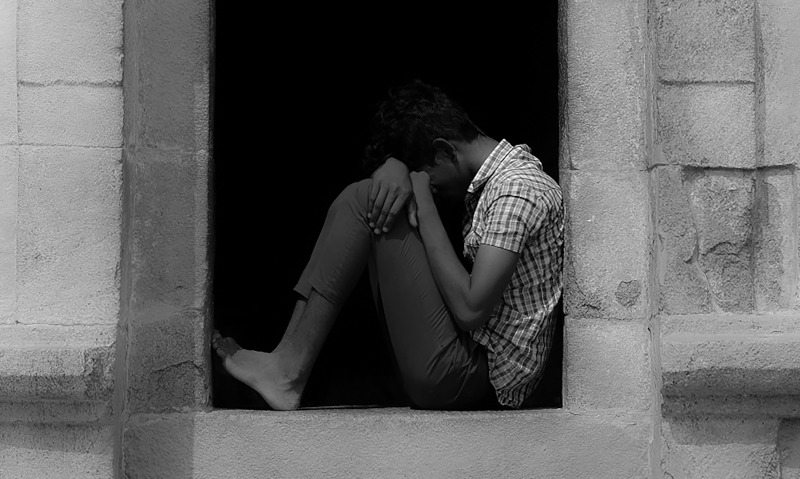
Lament provides a shared vulnerability for pain and suffering. It breaks the isolation an individual feels and cries for connection. Our call is to weep with those who weep, to say we are sorry and to try to understand what the other feels, to bear witness to the other’s pain.
Lament opens the door to hope. In the words of Amanda Benckhuysen: “Lament brings us to renewed action, empowerment and hope. Lament not only unites us in solidarity to God’s commitment to redeem and restore his fallen world, but is an act of hope.”6 Lament unites us in solidarity and joins our hearts to God’s commitment to redeem His suffering world. Lament assumes that someone is listening. In hope, life crosses that chasm from what is to what should be, and in this we support each other.
My Personal Quest of Lament
After nearly forty years as a Sister of Mercy, I can see that my understanding of lament has not come from theory alone, but from the slow shaping of my own life and vocation. The questions, losses, hopes and uncertainties that have marked my journey have given lament a personal language—one that has accompanied both my ministry and my faith as well as my life in community.
I remember choosing the closing hymn for my entrance ceremony into the Sisters of Mercy, “How Can I Keep from Singing?” In one of the adapted versions, there is a line that has stayed with me through the years: “beyond earth’s lamentation.”7 What I felt then, and what I continue to return to now, was a quiet but enduring hope that exists alongside the sorrow and uncertainty of the world, the Church and my own life.
Looking back, that moment marked the beginning of my deeper curiosity about lament. It raised a question that continues to shape my faith: Where does lament live within the life of God’s people? It is a question that leads, naturally and inevitably, to Scripture because the language of lament did not begin with us. It has always been a part of God’s story to His people.
Scripture and Lamentation
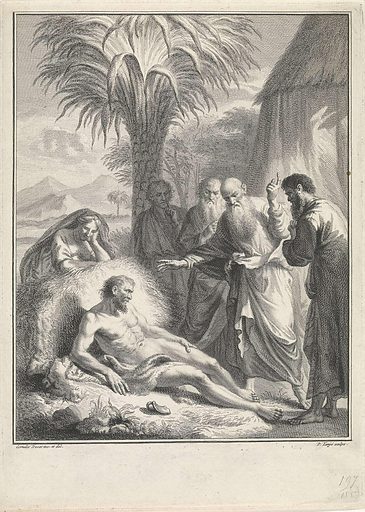
“Lamentation: The first language the heart learns, and the last it forgets.” This understanding echoes the spirit of the Book of Lamentations, traditionally attributed to the prophet Jeremiah. Focused on intense grief, sorrow and pain, the Book of Lamentations was written following the destruction of Jerusalem in 586 BC. Feeling such sorrow over this destruction, Jeremiah has come to be known as “the weeping prophet.” This is based on his wish to have a “fountain of tears” with which to mourn his people. “I wish my head were a well of water and my eyes fountains of tears so I could weep day and night for casualties among my dear, dear people” (Jeremiah 9:1-2).8 Jeremiah goes on to describe lamenting the loss of mountain pastures, and tells mourning women to listen to God’s word, speaking of a “black day” and feeling hopelessly wounded.
In the books of Jeremiah and Lamentations we can see the profound suffering of this faithful servant. In all of the trials he experienced, Jeremiah cried out in anguish and questioned the why of what he was called to, but his lament remained rooted in his trust of God. His lament did not cause him to turn from God but to turn toward him. In our times of lament, is this something we too can continue to rely on, to believe in? Jeremiah was called to serve at a young age, and his ministry was filled with disloyalty and loathing from the very ones he was trying to reach. He was beaten and ridiculed but remained faithful to his God. The name Jeremiah (in English, Jeremiad) means “a long mournful complaint of lamentation; a list of woes”9 God’s mercy to Jeremiah when he was left in an empty cistern to die shows so clearly that lament and faithfulness can coexist. Jeremiah carries the weight of heartache and still says of God’s love, “It is created new every morning. How great Your faithfulness” (Lamentations 3:23). Jeremiah remained in relationship to his God.
While Jeremiah uses a personal voice of lament, the Psalms demonstrate a communal voice, woven into the prayer life of God’s people. Approximately one third of the psalms are of lament, expressing anger, sadness, resentment, guilt; usually moving from a plea to praise. Lament honestly spoken leads to hope. The Psalms help us to articulate such emotions. “Long enough, God—you’ve ignored me long enough” (Psalm 13:1), allows us to express the frustration of feeling forgotten by God, pleading to know how much longer I need to wait. Psalm 16 shares the hope that comes from asking such questions, “I’m happy from the inside out, and from the outside in, I’m firmly formed” (Psalm 16:9). When I can express my discomfort, I also feel compelled to express my relief. Lament admits the possibility of both change and transformation. In Psalm 18 lament comes full circle when we read, “God made my life complete when I placed all the pieces before Him” (Psalm 18:20). The Psalms and scripture in general give us permission to speak honestly to God.
“Jesus wept” (John 11:35), the shortest verse in the Bible, shows Jesus lamenting, expressing a sorrow too deep for words. We hear similar cries in Matthew 10:35, “When He looked out over the crowds, His heart broke,” and in Matthew 27:46 when Jesus cries out “Eli, Eli, lama sabachthani?” begging to know why he has been abandoned. In scripture as in life the call has been to name the sorrow and turn towards the light.
The Invitation
And so, perhaps the invitation of lament is not simply to name our sorrow, but to dwell with it long enough for the light to find us there. Lament may begin without words, but it finds voice in honesty, connection, faith and hope.
Lament is written into the fabric of our lives—in scripture, in our stories, and in the quiet moments we carry each day. In closing, I offer this gift.
The Gift of Tears
“Fill my heart with love that every teardrop may become a star.”10
Every teardrop a star . . . the night sky will be lit brighter than we’ve ever seen it before. Perhaps every tear becomes part of a greater light – seen, held, and transformed in ways we may never fully understand. Imagine if you can for a moment the last few times you cried. Now that you have these in memory, turn them into blessings. Say thank you to the God of your understanding for these tears. I truly believe that the things and persons that I have cried over, no matter how much they hurt, were some of the greatest blessings in my days. They were the things that have stretched me the farthest and helped me to grow the most. No, it didn’t feel that way in the moment, it takes time. Give yourself the time to feel the sadness, the lament before you let it go.
If tonight you happen to notice a star in the sky, receive it as a quiet blessing. Let it remind you that the tears you have shed were not signs of weakness, but of love—evidence of a heart willing to feel deeply and to remain open in a world that often hurts. The cry that begins our lives is not the sound of despair, but of hope, a reaching toward connection, toward comfort, toward life itself. So it is with lament. When we allow our sorrow to be named and held, it does not diminish us. It becomes light. And in that light, beyond earth’s lamentation, hope continues to shine.
Notes:
- Bessel van der Kolk, The Body Keeps the Score: Brain, Mind, and Body in the Healing of Trauma (New York: Viking, 2014), 95.
- Elaine Scarry, The Body in Pain: The Making and Unmaking of the World (New York: Oxford University Press, 1985), 3.
- Nan C. Merrill, Psalms for Praying: An Invitation to Wholeness (Continuum International Publishing Group, 2007).
- Congregation of the Sisters of Mercy, Constitutions and Statutes (2024).
- J.R.R. Tolkien, The Fellowship of the Ring (London: HarperCollins, 1991), 150.
- Amanda Benckhuysen, “Lament as Protest and Hope,” Reformed Journal, August 17, 2025, https://reformedjournal.com/.
- Robert Lowry, “How Can I keep From Singing?” (1868). Line quoted from a modern adapted version commonly used in contemporary hymn and choral arrangements.
- Unless otherwise noted, all scripture quotations are taken from The Message: The Bible in Contemporary Language, translated by Eugene H. Peterson (Colorado Springs: NavPress, 2002).
- Oxford English Dictionary, s.v. “jeremiad,” accessed Jan. 26, 2026, https://www.oed.com/.
- Hazrat Inayat Khan, quoted in The Art of Being and Becoming (Boston: Shambhala, 1994).

image: Available at rawpixel (public domain).