

On September 24, 2025, Finland’s President Alexander Stubb addressed the General Assembly of the United Nations on the “new world order.” His presentation was titled, “The Foundation of Foreign Policy: Values, Interests, and Power.”1 While measured in many regards, it was a lament to the world.
In the Hebrew Scriptures we often read how the prophets lamented to their Lord when they found themselves in grave situations, usually because their leaders, or the people, or all involved did not align their values, interests, and power in an optimally religious orthodox direction. Back then and now, when we get the basics out of sorts, we suffer, with some always suffering more than others.
However, over the course of recent centuries, even recent decades, we see what philosophers and theologians refer to as a “turn to the subject,” an increased giving over of attention to human values, interests, and power, giving some degree of slight to what Abrahamic traditions describe as the Transcendent. Reasons for this shift are still debated, but they include the power and reach of science and technology and people’s demand for greater agency, freedom, and human rights. In addition, while the very topic of “God” is vibrantly alive, there is no one voice who speaks for all. The spectrum is wide with believers, different kinds of believers, non-believers, non-believers who still appreciate what religions offer, to those just not interested all rubbing shoulders in person and online, sometimes respectfully, and sometimes violently.
While tensions persist, there is general recognition that there exists a variety of thoughts and nuance about what people mean when referring to “God,” as well as to God’s values, interest, and power. Certainly, questions persist about whether God or gods exist or not, or whether there exists a universal consciousness with relational, moral fortitude. Yet, there at the intersection of that vertical and horizontal gaze, we wrestle with what to value, with what interests we share and how to gain power, use it, share it, and even surrender it.
Though values, interests, and power color and inform our joys and sufferings in a myriad of ways, all human hearts converge in knowing some degree of suffering and grief, and on occasion some find that nothing can be done but to fall down into sorrow and wail. We lament, but to whom?

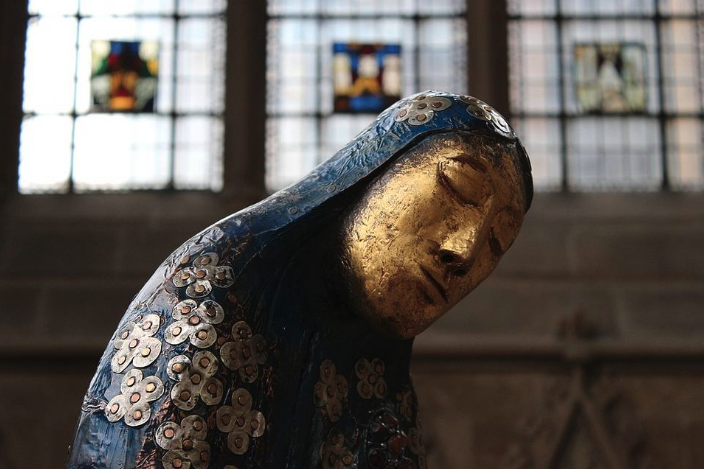
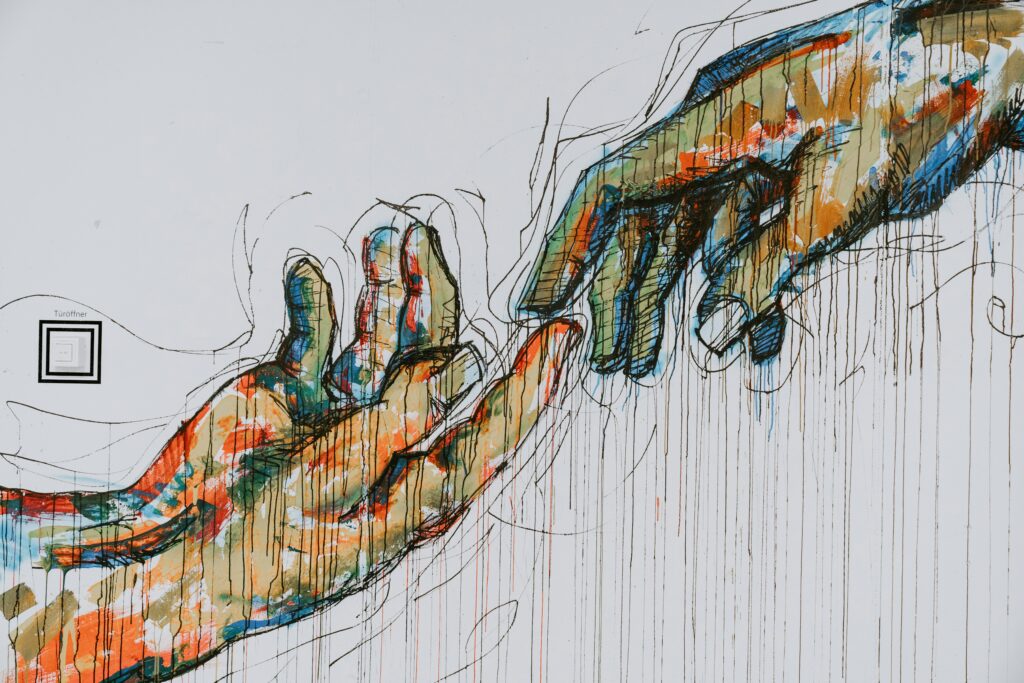
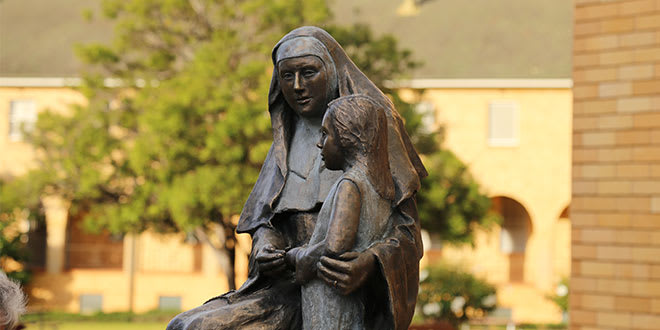
Photo by MP Cancienne
To lament is to grieve. It is a saturated kind of grieving that soaks us till our tears dry up. It speaks of incomprehensible sorrow and dislocation. Lament itself does not relieve the despair of soul, or relocate us beyond our loss, yet we cannot do other than this that we call lament.
Standing at the podium of the U.N. General Assembly, President Stubb lamented to global leaders and colleagues, just as many have done before him. He insisted, even in his measured tone, that world leaders must do better to sustain and embrace international forums of dialogue and negotiation in service of sanity and life on Earth. He did what many prophets across religious and political traditions have done for centuries.
He pleaded from a place of soul-searching, well-informed sorrow and worry, from a place of compassion for those who suffer today and tomorrow, and from a place where old and young struggle forthrightly with what is right and wrong, though rarely purely so. Prophets who speak with integrity and humility, think Martin Luther King, Jr., Gandhi, Wangari Maathai, Jane Goodall, or Catherine McAuley, who call us to give voice to our best approximations of what is true and good, knowing we will fall short, and that we will have to discern together what to do when players go rogue.
Frustrated, but stately, he pleaded before the nations for a shared vision and commitment, grounded in values that most can agree upon or at least acknowledge, further exclaiming that while people and nations around the planet have different interests, we must do more than focus only on transactional wins for our team. His plea then culminated in the subject of power. Here, he asserted that power is more than brute force ruthlessly grabbing to hold first place, or a potency that challenges the big guy. Instead, Stubb claimed that real power comprises the power of legitimacy, integrity, and international cooperation codified in rules of law that support peace, sustainable development, and human dignity. He was lamenting in his own way and in a certain venue, the grave condition of our time. He was begging humanity to feel the weight of suffering, to see the crisis, and to fall into that place where we must face reality.
During this period of epoch-making rapid change, reality includes the fact that some basic values are under siege. For example, in the United States even accepted and refined “rules of war” are being sidelined.2 We experience angst and fear over what is being dismantled, rudimentary principles and norms related to war. Essential questions about the purpose, use, and rules of “war” should be reexamined in a time when weapons and modes of lethality are ubiquitous. Yet, core principles of decency are being dismissed as problematic to the advancement of victory. This is beyond words, it is lamentable.
In times of trouble, prophets rose up and urged people to open their eyes, to see what was happening, to name the values needed for survival, and to do so in dialogue with a broader concern for the common good, to remember one’s neighbor, the stranger, the alien, even one’s enemies, and to take agency and responsibility, using one’s power to move things toward the good, knowing there will be a cost. Today, we not only look toward individuals marked for leadership, but to groups and organizations that help us collaboratively mobilize prophetic visions. Together we ask: How do we live, work and flourish fairly, creatively well, and sustainably, and avoid collapsing into violence and anarchy, which leaves the most powerful or the most cunning, stealth power to take what they want, leaving to others what they can glean from the stubbled fields?
These times are scary when we consider how many critical issues are staring us in the face, even if we do not care to face them back, many created by human greed and a desire for short term satisfaction. But many of our troubles come out of simple innocence, ignorance, or delusion, with roots going back centuries involving how we understood the world and our purpose in it. Some because we held on to ideas that no longer worked, but we could not let them go. Some issues only became problematic and critical as they were scaled up to meet the needs of a growing human population.
Yet, however we got to this moment in history, though disorienting and troubling, these times are also brimming with possibilities. Remember, the eyes of youth can still see far, even when some of us struggle with our vision.
Kathleen O’Connor writes that the Book of Lamentations, “for all its brutality,” is an “invitation to life.” In her “unapologetic defense of Lamentations,” O’Connor “lauds its capacity to overcome denial, personal and political, to lead toward healing and compassion, and to release life’s energies for the work of justice and praise.” It is poetry that “mirrors reality.”3
Turning to the present reality, she sees in the United States the woes of life, but more than these, there are despairs and violence that slash at our very humanity. Here she writes, “For our sake and for the sake of the world over which we try callously to preside, these things demand lamentation.”4
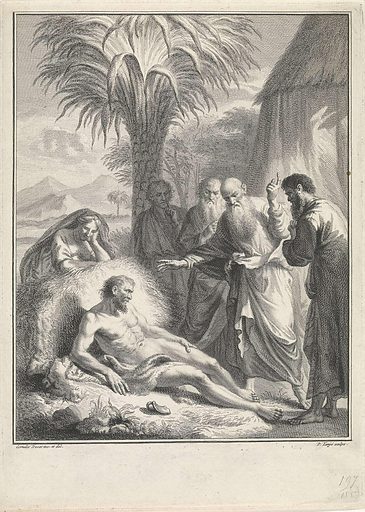
To speak of lament points us toward a territory where tears do not seem to work anymore, they do not soothe our sorrow. Lamenting, paradoxically, happens from a place filled with emptiness or run-through with the tearing down of what is held precious, like our values, interests and power. The one who laments is often fiercely determined to be seen and to speak to the one in charge, demanding their response. (One cannot forget Job.)
After all, what more is there to lose? When we personally or collectively come to that wasted land of lamenting, we do not know and maybe do not even care if we make it out of that place, so why be polite? For some there is still a ray of light, and for others there is not. Who will respond? Is anyone listening? Is there a caring God?
People lament in different ways. Some are more flamboyant and dramatic, while others are more reserved. We plead, wail, cry, pray, moan, grieve and despair through song, dance, art, poetry, using different styles, languages, formats, and platforms.
Music can help, sometimes. It can be a consoling, rejuvenating vibration that soothes our soul. Another kind of mirroring of reality. But sometimes the music does not help or even just goes away. In Psalm 137, the psalmist depicts exiled Israelites in Babylon refusing to sing their sacred songs, as demanded by their captors, instead hanging their harps on willows in deep sorrow and then wishing horror upon their keepers.
By the rivers of Babylon, there we sat, sat and wept, as we thought of Zion.
There on the poplars we hung up our lyres, for our captors asked us there for songs, our tormentors, for amusement, “Sing us one of the songs of Zion.”
How can we sing a song of the Lord on alien soil?
If I forget you, O Jerusalem, let my right hand wither, let my tongue stick to my palate if I cease to think of you, if I do not keep Jerusalem in memory even at my happiest hour.
Remember, O Lord, against the Edomites the day of Jerusalem’s fall; how they cried, “Strip her, strip her to her very foundations!”
Fair Babylon, you predator, a blessing on him who repays you in kind what you have inflicted on us; a blessing on him who seizes your babies and dashes them against the rocks!
(The Jewish Study Bible, JPS, Psalm 137)
New Orleans embraces what is called the “Second Line,” a ritual where heavy somber music begins the funeral dirge as the coffin is carried out of the church and to the cemetery. Incarnated sorrow drags your too heavy mournful heart slowly along the street. Then, at some point, there is a move to another beat. Gradually, step-by-step, there is a shift toward celebrating the life of the one who died. There is wonder even in the depth of sorrow. The community, together, carries the sway of sorrow and rejoicing inside themselves.5
My concern is whether collectively we are willing to lament, as small gatherings, larger communities, even as a collaborative global society. Recall how we gathered around the world at the turn of the millennium.
Values are challenged, interests are shifting, and power is reorganizing. This is not all woe, but we should not deny the troubles and the pain. Nor should we equate lamenting with moral high ground. Thieves have codes, and murderers suffer and cry.
Instead, take stock: How are we valuing the wonders of life, focusing our interest, and using power? My fear is that if we cannot go to that dismantled place, one of deep confusion and grieving, as well as silence and desolation, then we will not be able to fill our days with new perspective, vigor, and wonder for what life could be. If we do not reach that level of lamenting in our own bones, will we have the emptiness of soul that only then frees us to turn and include in our gaze something more than ourselves? — Today, let us hear the cry around us, within us, and beyond us, and fall, down, down into the prayer of lamenting.
Notes:
- Alexander Stubbs, “Finland’s President Delivers Most Inspiring, Powerful UN Speech Yet on Multipolar World Order | AC1G” (New York: September 24, 2026), https://youtu.be/ECaqX1hCQ6g?si=oZbqQPv4xOcu-roz.
- Greg Jaffe, “How Hegseth Came to See Moral Purpose in War as Weakness,” New York Times (March 12, 2026), https://www.nytimes.com/2026/03/12/us/politics/hegseth-iran-war.html?smid=nytcore-ios-share.
- Kathleen H O’Connor, Lamentations and the Tears of the of the World (New York: Orbis Books, 2002), 4.
- O’Connor, Lamentations, 5.
- “You better second line! Jazz funeral in New Orleans for Juanita Brooks,” posted October 20, 2009, YouTube, 7 min., 38 sec., https://youtu.be/EG6KH905cGU.

image: “Sunset over water” by Ed Gregory.