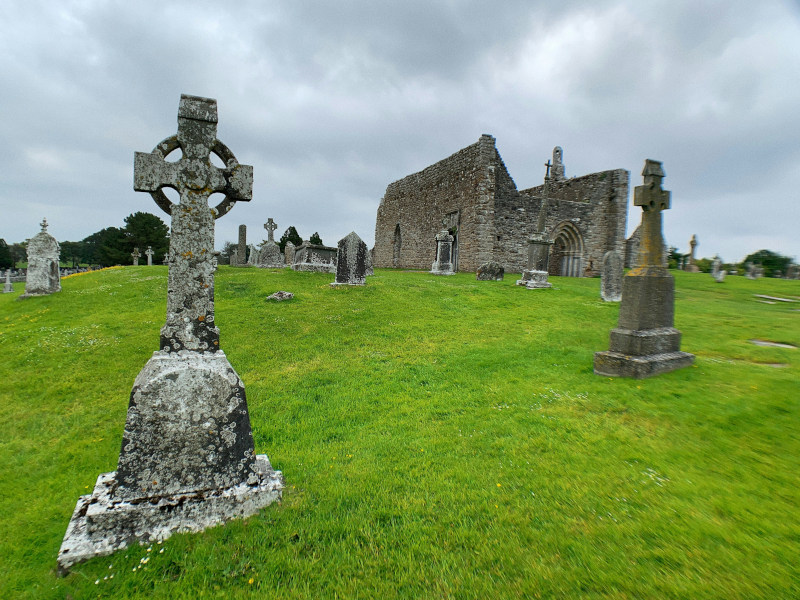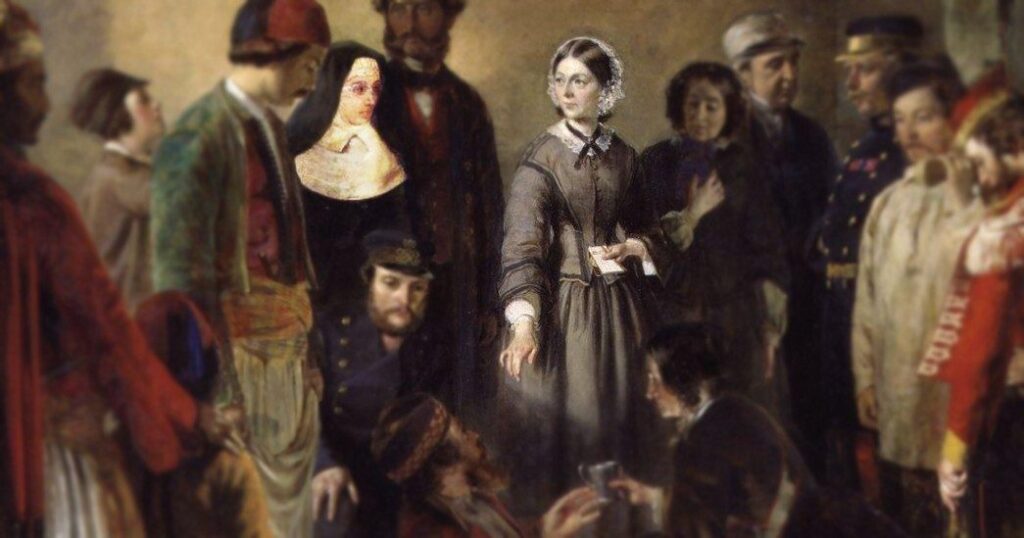

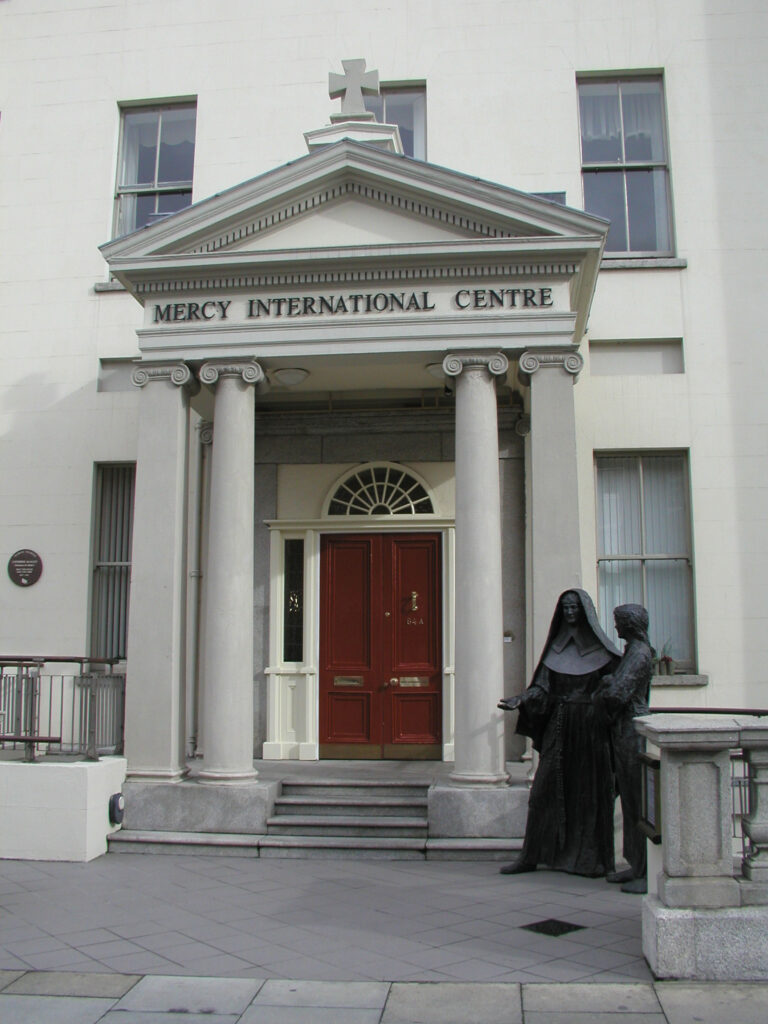
Catherine McAuley, a Catholic woman from nineteenth-century Ireland, was characterized by a tender courage. In Catherine’s purity of heart nested a tender love for vulnerable people similar to Jesus, who said, “Come to me all who are tired and burdened and I will give you rest” (Mt. 11:23). Like Jesus, she made visible the Merciful Love of God.
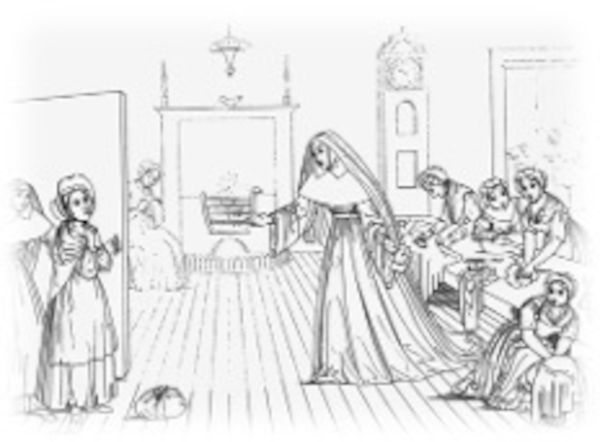
She established the House of Mercy among people with greater economic means, in this way managing to make visible the presence of the most vulnerable people of her time. In the words of Mary Sullivan, RSM, Catherine McAuley, moved by her love of Jesus, ventured into the unknown for the good of the poor and suffering people of God.1
Her tender courage was shown demonstrated by bravery in helping the poor because of a great love for Jesus, reflecting that love through actions. This courage led her to walk the streets, visiting the sick and educating the poor. In those times, women didn’t go out into the streets by themselves. She treated people kindly, recognizing the presence of God in them.
That tender courage has been part of the spirituality of Catherine’s Sisters of Mercy, who continue today to challenge poverty and the social norms that fail to recognize poor people as persons of equal dignity—sons and daughters of God.
Catherine’s tender courage is not a story from the past; her sisters have been faithful to her teachings over all these years. One of these experiences carried out in Panama City shows this tender courage in action in the work of the Center for Family Education and Counseling (CFEC).
The CFEC in Panama City was born on July 5, 1998. Its seeds were planted and grew in the classrooms of the Catholic University of Santa María la Antigua, in the classes of the Masters in Family Counseling program. There was a family lawyer and one or two family counselors, all volunteers. We didn’t even have a chair when we started.
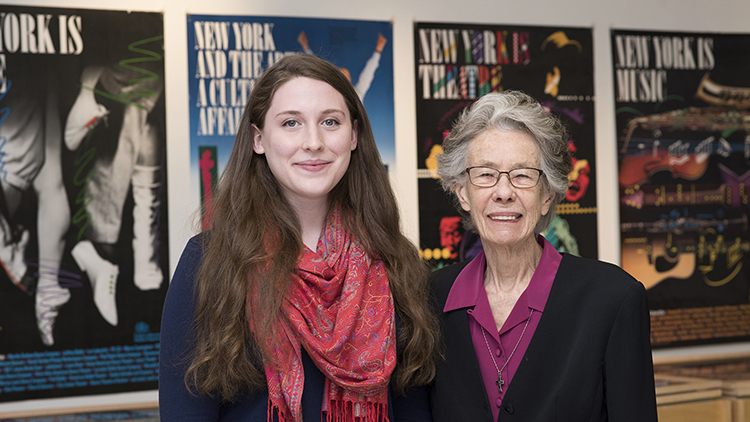
The fear of acquiring debt to begin the program without having the ability to repay it came up in a process of discernment with the Mercy community in Panama.2 Sisters Patricia Gale and Margaret Dempsey came to Panama to visit as leaders of the Brooklyn Community. These two sisters, following the example of Catherine McAuley, didn’t hesitate to encourage us to move ahead to realize our dream. In English there is a saying: “Where there is a will, there’s a way.” They helped us find the way.
Their recommendation was to write a proposal to request funding from the Mercy Ministry Fund Program. Little by little, other volunteers joined and we began workshops about healthy family interactions; family counseling sessions, both for couples and individuals; tutoring for children; and workshops for youth, parents, and couples. We also began to visit parishes to offer our services.
Today, our program turned 28—28 years of serving families that live in Panama, especially migrant families. We have expanded our services to include a scholarship program for migrant children; workshops for parents and children; an entrepreneurship program for migrants; programs for dealing with violence, such as the Alternatives to Violence Program; workshops for women to recognize the different ways that violence manifests in the home; the court process to report violence; the use of EMDR3 to treat trauma and provide spiritual and psychological support; as well as humanitarian aid.
We are grateful to the Sisters of Brooklyn, especially those that were in leadership, for their emotional and economic support, for helping us to see the wider Mercy mission. We also thank the Santulli family, who gave funds for our mission for several years.
Our gratitude also goes out to the whole Institute, which made it possible to extend Mercy to families, youth, and children in need of services and be a voice of hope in the midst of uncertainty.
We also thank all the Sisters of Mercy as well as the associates and volunteers who have accompanied us on this path of Mercy, leaving their mark on those who have knocked on our door.
We give thanks to the migrant families who have trusted in us, who found a listening and compassionate ear, who moved us with their stories, their desires for a better life, their struggles and uncertainties, their pain and joy.
Today we are linking with the ministries of our sisters, with universities and La Red Clamor, a church network from Latin America and the Caribbean that deals with migrants, displaced persons, refugees, and human trafficking. We continue our work, accompanying with tender courage the families in Panama, especially immigrant families.
Notes:
- Mary Sullivan, “Catherine McAuley’s Methods of Leadership Development,” The MAST Journal 30, no. 1 (2025).
- The Sisters of Mercy of Brooklyn began the mission in Panama in 1954 and exercised leadership of that community until 2006 when the Panama community became part of the community in the Caribbean, Central and South America.
- Eye movement desensitization and reprocessing therapy, commonly known as EMDR, is a mental health therapy method (Cleveland Clinic, https://my.clevelandclinic.org/health/treatments/22641-emdr-therapy).