

“We ought then have great confidence in God in the discharge of all these offices of mercy, spiritual and corporal, which constitute the business of our lives.”1
From the beginning, Catherine McAuley recognized the call to respond to those in need as rooted not in stages of life or formal roles, but in attentive listening to the cry of God’s people. She spoke of the works of mercy as “the business of our lives,” naming them as a lifelong response to God, offered freely and without distinction.
Across generations, the lived experience of the Sisters of Mercy gives witness to this truth. Again and again, stories tell of sisters who, after stepping away from full-time ministerial roles, continued engaging in the works of mercy in quieter and often unseen ways. What has changed in recent decades is not the practice itself, but our capacity to notice it, name it, and reflect on it with greater intention. Contemporary language such as pre-tirement2 and encore ministries3 helps us recognize, bless, and value how the works of mercy continue to unfold across the full arc of a sister’s life.
Seen in this light, pre-tirement and encore ministries do not represent departures from the Mercy tradition. Rather, they express it. These terms help us articulate what the tradition has long held implicitly: the call to mercy endures, adapts, and deepens, even as roles shift and energy changes over the years. Mercy itself is a never-ending story, one that continues to unfold in new forms throughout all of life while remaining rooted in the same Gospel call that animated Catherine McAuley and her first companions at the House of Mercy.
The Third Age: Where the Work of Mercy Continues
We come to understand pre-tirement and encore ministries most fully when we attend to what many now call the Third Age of life.4 Advances in longevity during the twentieth century opened this extended time of life as a new and meaningful chapter.5 The Third Age usually refers to the last third of one’s life prior to the onset of significant physical and cognitive limitations that often accompany advanced age. For many Sisters of Mercy, this time of life can stretch across two or even three decades, offering a grace-filled experience of life and ministry that earlier generations rarely knew. During these years, the works of mercy do not recede; they find new depth, new rhythms, and new ways to bless both the sister and those she continues to serve faithfully.
Rather than signaling a time of winding down, the Third Age opens sacred space for continued becoming. With fewer externally imposed roles and expectations, this stage of life invites deeper attentiveness to one’s inner life, relationships, and the subtle movements of God’s Spirit. Time expands. Sisters often breathe more freely, listen more attentively, and notice what years of merciful service have slowly formed and re-formed within them. During this time of life identity increasingly reflects not what one does, but who one has become.
The Third Age also invites sisters to befriend their lives as they truly are. As they look back over a lifetime shaped by community and ministry, they often recognize their “joys and sorrows mingled.”6 Moments of deep consolation live alongside experiences of loss, disappointment, and unresolved grief. Faithfulness and regret, meaning and mystery, success and limitation all have a place. This life review7 does not call sisters to nostalgia or self-judgment; instead, it opens a path toward integration and healing. As sisters recall their lives with honesty, tenderness, and compassion, they often discover a growing sense of peace, deeper self-acceptance, and renewed trust in God’s faithful and abiding mercy.
Many voices within our tradition affirm the spiritual significance of the Third Age. Myles Sheehan, SJ,8 and Joyce Rupp, OSM,9 remind us that these years continue to invite us to become the persons God longs for us to be. Karl Rahner, SJ, speaks even more boldly, naming later years as an irreplaceable dimension of vocation, a time when life does not diminish, but comes into fullness. Meaning does not run out; as Rahner suggests, “the meaning of one’s life may yet be determined during these years.”10 Pope Francis echoed this same hope when he described this season as “no time to give up and lower the sails, but rather a time of enduring fruitfulness, when a new mission awaits and invites us to look to the future.”11
Ultimately, the Third Age calls us less toward doing and more toward being, toward presence, availability, and the quiet witness of lives deeply shaped by years immersed in “the business of our lives,” the works of mercy.
Retirement of Pre-tirement: A Question of Discernment
The transition away from full-time ministry marks one of the most significant passages in the life of a Sister of Mercy. Although the term retirement has not always belonged to our religious lexicon, every sister eventually encounters the lived reality of stepping aside from sustained ministerial engagement. Many experience this transition as abrupt and disorienting. The loss of long-held ministerial roles, familiar routines, and external identities can evoke grief, vulnerability, depression, and a diminished sense of purpose. Relationships formed through years of collaborative ministry may shift, daily structure may loosen, and familiar sources of support may fade.
Research and lived experience together demonstrate that retirement involves far more than logistical change; it initiates a deeply human and spiritual transition.12 While some sisters initially feel relief from long-standing demands, they may later experience decreased contentment or a hunger for continued meaningful engagement.13 Changes in physical energy, community restructuring, and the possibility of relocation or renegotiated communal living arrangements can further complicate this transition. Taken together, these realities call for a compassionate and gradual approach to stepping away from full-time ministry.
Within this context, pre-tirement emerges as a pastoral and discerning response. Rather than marking a sharp ending, pre-tirement initiates a gentle passage, one that allows ministry, identity, and relationship to reshape themselves over time. It honors a sister’s changing capacity while affirming the enduring desire to remain engaged, connected, and responsive to need. Pre-tirement does not deny limitation; instead, it integrates limitation into a faithful reimagining of how one continues to minister through works of mercy during the Third Age.
Pre-tirement: Mercy Taking New Form
As noted, pre-tirement typically unfolds as a gradual stepping aside from full-time ministry over a period of many years. During pre-tirement, sisters do not abandon ministry; they adapt it. They adjust commitments to match energy and capacity while sustaining rhythms of prayer, relationship, and engagement. This gradual shift supports continuity and balance and reduces the sense of rupture that often accompanies abrupt stepping away from years of ministerial engagement.
Pre-tirement offers significant and multidimensional benefits. Psychologically, it helps sisters reframe identity, not as the loss of ministry, but as a faithful shift in how their call to mercy continues. Relationally, it fosters sustained connections with ministries, communities, and networks of mutual support, helping to buffer isolation. Emotionally, the gentle pace of pre-tirement eases grief and stress and allows change to unfold with steadiness and resilience.
Spiritually,14 pre-tirement opens space for contemplative depth. With fewer external demands, sisters gain greater access to time for prayer, reflective leisure,15 spiritual direction, life review, and integration. Long-cherished practices such as journaling, artistic creative expression, engagement with nature, and faith sharing often move closer to the center of daily life. Through these practices, pre-tirement nurtures a spirituality marked by attentiveness, presence, and openness to God’s ongoing call. Mercy takes new form, even as its source remains unchanged.
Encore Ministries: Mercy Continuing to Unfold
The term encore ministries describes, in contemporary language, the various works of mercy sisters embrace after stepping away from decades of full-time ministry. Naming these commitments as ministry makes an important theological affirmation: mercy does not end when formal ministerial engagement concludes. Rather, the works of mercy continue wherever a sister responds to God’s people with compassion, care, and presence. The word encore itself carries a touch of lightness and joy. It evokes the image of performers returning to the stage, not out of obligation, but because their gifts still have something to offer. In much the same way, sisters in their Third Age through encore ministries share wisdom, presence, and love shaped over a lifetime of faithful service. Their ministry deserves recognition, gratitude, and blessing. They deserve to take a bow!
Encore ministries flow from years of faithful response to the needs of God’s people. With fewer demands and pressures than full-time ministry once required, sisters often minister with a quieter freedom, deepened wisdom, and loving attentiveness. Their ministry follows a gentler rhythm, less structured, more spacious, and richly relational. Presence is paramount: a willingness to listen deeply, to accompany others with compassion, and to notice those moments and people that might otherwise go unseen.
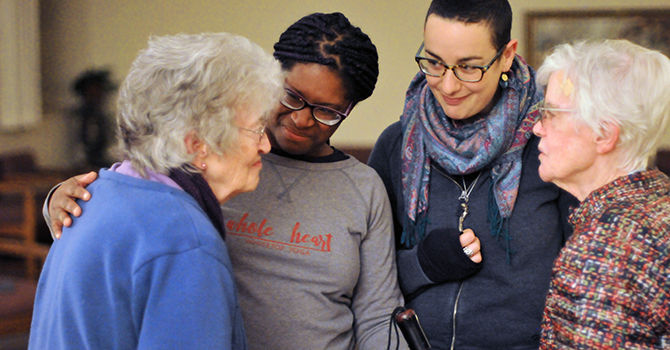
The types of encore ministries that sisters engage in are legion. Sisters may offer a merciful presence in senior living facilities; tutor or mentor; visit parishes or homes; provide spiritual companionship; extend hospitality; participate in food pantries and outreach efforts; or serve in internal congregational ministries that nurture community life and care. These ministries may unfold quietly and without recognition, yet they remain vital. They draw upon a lifetime of experience, compassion, and spiritual depth and embody the works of mercy in ways uniquely suited to this stage of life.
Conclusion: Mercy’s Never-Ending Story
Pre-tirement and encore ministries provide contemporary language for a way of life Sisters of Mercy have always practiced: “the business of our lives” does not end when immersion in full-time ministry concludes. From Catherine McAuley onward, Sisters of Mercy have never confined the works of mercy to a particular ministry or stage of life. Mercy has flowed consistently from confidence in God and availability to need. By recognizing the importance of pre-tirement; a gradual stepping away from full-time ministry, and encore ministries, we recognize and honor a pattern of life deeply embedded in the Mercy tradition.
This naming of the works of mercy in the Third Age carries deep pastoral and communal meaning. It helps communities notice, bless, and honor the service sisters continue to do after years of full-time ministry, service that often unfolds quietly, relationally, and formatively. It also invites sisters themselves to claim these years as purposeful and grace-filled, shaped not by diminishment, but by a growing freedom to respond to what matters most.
Ultimately, pre-tirement and encore ministries help us see more clearly that mercy does not close a chapter and end; it tells a never-ending story that unfolds breath by breath. As our following of Jesus in the tradition of Catherine McAuley deepens, fruitfulness takes new forms, and the works of mercy endure. Catherine knew well that confidence in God frees us to keep responding in mercy for as long as we are able. In that confidence, the Third Age stands not as an ending, but as further chapters in Mercy’s never‑ending story still taking shape in faithfulness, compassion, and love.
Notes:
- Catherine McAuley, “The Spirit of the Institute,” in The Correspondence of Catherine McAuley 1818-1841, ed. Mary C. Sullivan, RSM (Baltimore, MD: The Catholic University of America, 2004), 462.
- In the context of this article “pre-tirement” is not a time of preparing for retirement. Rather, it is a span of time when a person gradually steps away from full ministerial involvement while still being of service to others in a variety of ways. Individuals who purposefully choose to pre-tire are known as “pre-tirees.”
- I coined the phrase “encore ministries” in 2019 after discovering the growing body of research regarding “encore careers.” The term “encore careers” was coined in 1997 by the Civic Ventures organization of San Francisco, CA. Now known as CoGenerate, this non-profit organization has conducted extensive research to support their findings that purpose, generativity, and volunteering have robust positive effects for older adults. For a great short video on inter-generational cooperation (something we, as women religious, do regularly!) view What Does It Mean to CoGenerate (2 min.) https://cogenerate.org/. Looking for inspiration? Enjoy the National Catholic Reporter’s 2015 article “An Open Letter to the Great Generation” by Teresa Maya, CCVI, past president of the LCWR. https://www.globalsistersreport.org/column/trends/open-letter-great-generation-16171.
- An interesting and entertaining short video about the Third Age is “Jane Fonda: Life’s Third Act,” TEDx Women 2011, 11 minutes, https://www.ted.com/talks/jane_fonda_life_s_third_act.
- A. Kalache, I. Voelcher, and M. Louvison, “Active Aging and the longevity revolution,” in Handbook of active ageing and quality of life: From concepts to applications, eds. F. Rojo-Pérez and G. Fernández-Mayoralas (Switzerland: Springer Nature Publishing, 2021), 43–62, https://doi.org/10.1007/978-3-030-58031-5_3.
- Catherine McAuley’s letter to Sr. M. Frances Warde, May 28, 1841. In The Correspondence of Catherine McAuley 1818-1841, ed. Mary C. Sullivan, RSM (Baltimore, MD: The Catholic University of America, 2004), 401.
- Many are familiar with the practice of completing a life review at various points in life. A life review is an opportunity to bring back into awareness memories, and perhaps unresolved past conflicts, for re-evaluation and resolution. Oft cited results include deeper self-knowledge, heightened serenity, and to a great extent the maintenance of healthy psychological functioning. One’s life review may also encourage movement towards gerotranscendence. See Sherryl White, CSJ, “Gerotranscendence: A Fresh Look at Positive Aging,” Engaging Aging, National Religious Retirement Office (NRRO), 10, no. 1 (2015): 1-6, https://www.usccb.org/about/national-religious-retirement-office/upload/Engaging-Aging-Newsletter-Spring-2015.pdf. Finally, Maya Angelou once noted that looking back over our life may offer us a chance “to forgive yourself for not knowing what you didn’t know before you learned it.”
- Myles N. Sheehan, SJ, “Aging as Opportunity,” Human Development, 28, no. 2 (2007), 20.
- Joyce Rupp, OSM, The Years of Ripening: Reflections on Aging in the Later Years (Maryknoll, NY: Orbis Books, 2025).
- Karl Rahner, SJ, “Growing Older” in Prayer and Meditations: An Anthology of Spiritual Writings (New York: Crossroad Publishing Company, 1981), 91.
- Pope Francis, “Message for the Second World Day for Grandparents and the Elderly,” 2022, https://www.vatican.va/content/francesco/en/messages/nonni/documents/20220503-messaggio-nonni-anziani.html.
- Of interest may be the Holmes-Rahe Life Stress Inventory. This self-assessment tool offers a glimpse into how sudden changes in our lives are associated with stress. Of the list’s 43 major life changes that most often create substantial stress, retirement is number ten! Remember, self-assessment tools are never the last word but rather serve as a “conversation starter” with yourself, or another (e.g., spiritual director, counselor, etc.). The Holmes-Rahe Life Stress Inventory can be found at https://www.aruplab.com/files/resources/clinic/lifestresstest.pdf. A new take on a life review has been developed by Stanford Medical School, Stanford University. Some may be interested in viewing this short video where individuals write a letter to loved ones, responding to seven questions usually included in a life review. When you watch the video have a few tissues nearby. Friends and Family Letter Project https://med.stanford.edu/letter/friendsandfamily.html (7 min.). See also the webinar offered by Saint Luke Institute, “Successful Transitions to Retirement” by Emily Cash, Psy.D. www.sliconnect.org. This video and others can be viewed for free after signing up for a two-week trial.
- Some researchers refer to this as the “sugar rush,” which may appear following stepping away from one’s life work.
- Studies have reported that spirituality and religious practice are as highly correlated with well-being, as is diet, exercise, mental stimulation, self-efficacy, and social connectedness. See Hellen Lavretsky, “Spirituality and Successful Aging,” Aging Health, 6, no. 6 (2010), 749.
- Constitutions of the Sisters of Mercy of the Americas, §16.