
“The future of the world will be what women make it.”1
– Mother Clare Cusack, a Sister of St. Joseph of Peace
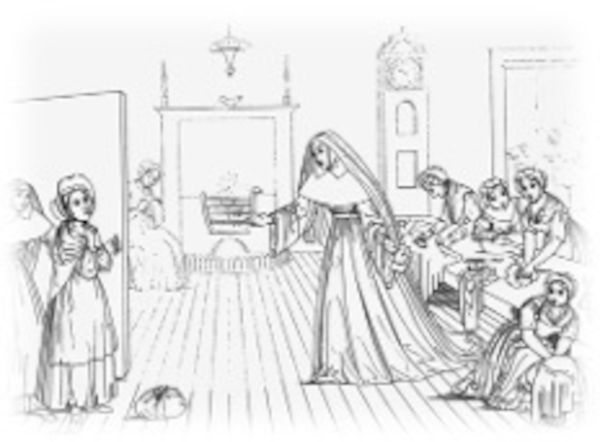
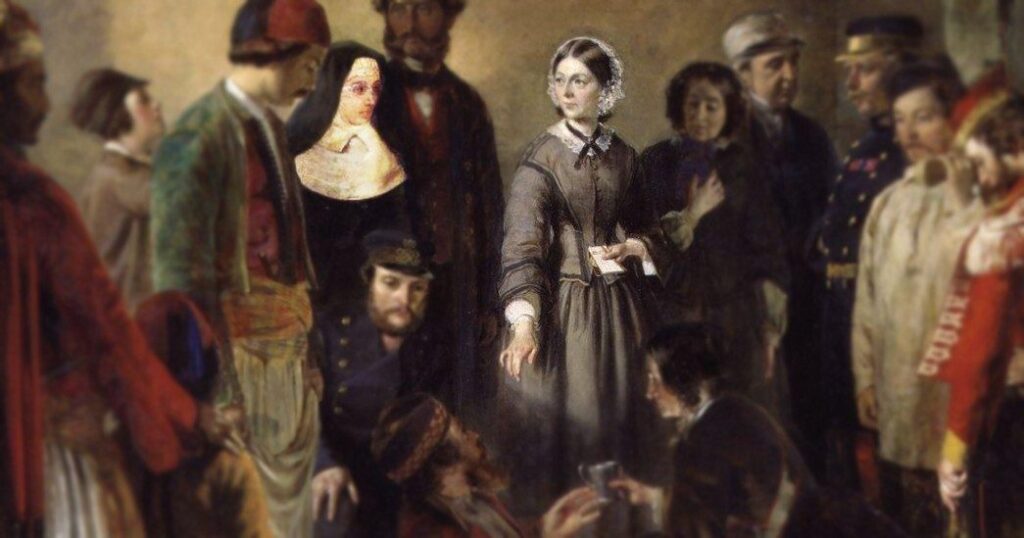
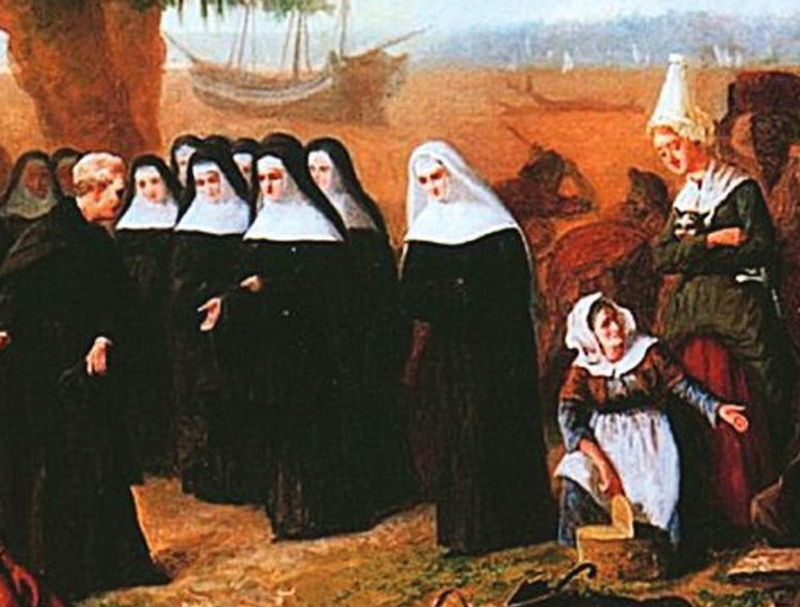
When a small band of Catholic sisters embarked on a five-and-a-half month sea voyage from France to New Orleans in 1727, they set forth on a crusade to bring care to the New World. Their mission was to open a hospital in the colony’s capital and start a school for young girls.
With no playbook or toolkit to guide them upon arrival, the 12 French Ursulines – Catholic sisters belonging to the Order of Saint Ursula – set forth into the great unknown of the wild city, where vice and corruption ran abundantly. Prepared with their faith, boldness, and creativity, they were not afraid to undertake the challenges that lay ahead, despite having no training or experience in health care.
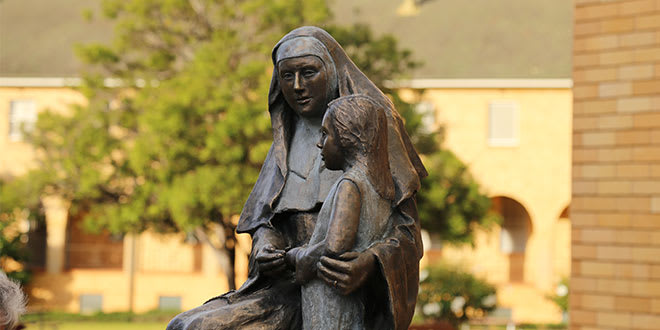
Although it took seven years to build the hospital, by the following year, the sisters were already nursing those in need, providing care to Black and Native American people. They also taught Black and Native American women and girls, and today, their school, Ursuline Academy, is the oldest Catholic school in the United States.2
With these sisters being the first Catholic women religious to arrive in what is now the United States, the light that they ignited would soon be set aflame brighter by other sisters to come.
When seven Sisters of Mercy left Ireland for Pittsburgh in 1843 at the invitation of the city’s bishop, they wasted no time in serving the community’s sick, poor, and uneducated. Under the leadership of Mother Frances Warde, they opened the first Mercy convent in the U.S. the day after their arrival. Just a few years later, in 1847, the convent became Mercy Hospital, the first one in Pittsburgh and the world’s first Mercy hospital, where they welcomed all patients regardless of race, nationality, age, gender, or religion.
Their ceaseless commitment and energy in ministering to the sick and poor inspired new recruits from Ireland. By 1854, several had settled in cities across the country, from New York City to San Francisco, to establish schools and hospitals, eventually laying the groundwork for what would later become one of the nation’s first Catholic health care systems.
There are countless other examples of sisters whose collective ministry gave selflessly to respond to the needs of their communities, helping to shape Catholic health care in America. Although many assumed responsibility for ministries that were new to them (in a country unfamiliar to them), they set forth courageously to care for the poor and abandoned, overcoming tremendous obstacles through innovation and perseverance, all while displaying God’s love.
It is this legacy of strength and boldness that propels us forward as Catholic women religious, enabling us to continue meeting the needs of the times. It inspires us to seek opportunities and reimagine new ways to care for the most vulnerable among us, particularly women and children.
With the potential loss of health care access for millions of U.S. Americans, we must collectively work to protect the well-being of those in need. Just as the women religious who came before us traveled across vast and turbulent waters to overcome the challenges of the unknown, we can once again navigate stormy obstacles ahead, all while demonstrating God’s love to increase access to care and continue human flourishing.
PAVING A PATH TO ENSURE CARE
As I reflect on the sisters who came before us, I see momentous examples of their same steadfast commitment and creativity carried out by women religious leaders in recent decades. From advocating for health care reform to reshaping the corporate identity of sisters, their efforts have continued to transform the Catholic health care ministry.
Sister Mary Concilia Moran, RSM
The visionary leadership displayed by the late Sister Mary Concilia Moran, RSM, for example, the first post-Vatican II superior of the Sisters of Mercy of the Union, carries on as inspiration today for Catholic health care leaders. Her hospitable and inclusive style infused her work in multiple ways, from efforts to promote programs for the development of sisters within the community to prioritizing broader human needs beyond immediate health care services.
Serving in nearly every role in Mercy health care — including as a nurse, hospital administrator, provincial superior, institute superior, hospital and system trustee, and system executive — the energy and joy that Concilia brought to her work brought immense change. By drawing on the concept of “sponsorship” to describe and symbolize the new relationship between the religious congregation and its institutional ministries, she was the first to systematically examine sponsorship and bring it into common dialect in the late 1970s.
Her vision for this novel approach required an entirely new framework — including new perceptions, skills, practices, and structures — to ensure the continuation of Catholic health care’s mission. To help make this vision a reality, Concilia led the creation of sponsorship tools through mission effectiveness strategies.
Along the way, she was an ardent supporter of sharing expertise and knowledge across the ministry. She initiated efforts to develop programs to help reshape and enhance the role of the sisters. These programs — created for jubilarians, sisters preparing for vows, provincial leaders, and others — blended prayer, community life, theological reflection, and the arts long before anyone was talking about “holistic living.” Furthermore, she welcomed collaboration with those from other health systems nationally and abroad.
Concilia’s work even inspired an award named in her honor. The Sister Concilia Moran Award, first awarded by the Catholic Health Association (CHA) in 1992, recognized visionary leaders in Catholic health care who demonstrated creativity and breakthrough thinking that advance the ministry.
Sister Carol Keehan, DC
When it comes to continuing the legacy of women religious in ensuring access to quality health care for everyone, regardless of their ability to pay, one need look no further than my predecessor, Sister Carol Keehan, DC,3 as an influential voice. Through her career as a nurse, hospital leader, and the ninth president and chief operating officer of CHA, she played a significant role in gathering political support for the passage of the Affordable Care Act (ACA) in 2010.
Beginning in 2009, Carol worked closely with President Barack Obama’s administration and brought the priorities of the Catholic health ministry into discussions with White House and congressional officials to support legislation that would expand access to health care to approximately 20 million Americans.4 Just as early women religious faced hostility and opposition in their plight to bring care to all around the nation, Carol withstood critical backlash and even threats as she advocated for health reform that left no one behind.
Through her courageous work advocating for the poor and vulnerable, her efforts helped secure the necessary votes for the bill’s passage. President Obama even gave Carol one of the pens he used to sign the legislation, demonstrating the significant impact she had on the passage of the ACA. When she received the Spirit of Francis Award from the Catholic Extension Society in 2022, Pope Francis praised her work in supporting legislation, commending her as someone “continuing the healing ministry of Jesus Christ through the provision of quality health care for all, especially those most in need.”5
Carol has held influential roles in the governance of various health care, insurance, and educational organizations, and her work has advanced Catholic teaching on social justice through her resolute advocacy for the poor and vulnerable. CHA even bestows an award annually in her name to recognize individuals who boldly advance Jesus’ healing mission by championing a more just and compassionate health system.
Sister Bernice Coreil, DC
Another voice that has helped to shape health care reform is that of Sister Bernice Coreil, DC. In the 1990s, Bernice served as chair of CHA’s Leadership Task Force on National Health Policy Reform and advocated for systemic health care reform, particularly the need for universal access and comprehensive benefits.
In 1993, Bernice presented CHA’s vision for a redesigned health care system at a public meeting of President Bill Clinton’s Task Force on National Health Reform. The proposal, called “Setting Relationships Right,” aimed to establish new systems of care that were more responsive to individuals and more accountable to communities, while also bringing costs under control.
In 1994, she was one of three representatives of health care providers chosen to address a White House gathering of 200 health care professionals who favored universal coverage. Bernice, who at the time served as senior vice president of system integration for then Daughters of Charity National Health System, was introduced to the group by Hillary Rodham Clinton as “a leader in making sure everyone knows that reform is not just an issue of politics — it is an issue of conscience.”6
Many components of CHA’s proposal became integrated into the White House’s health care plan, and although President Clinton’s Health Security Act failed, the fight for universal coverage carried on. Bernice continued to be a prominent voice in the push for health care justice throughout her career.
A collaborative leader in the formation of Ascension, Bernice, a former CHA board chair, previously served as senior advisor to Ascension’s president and chief executive officer. In 2003, she received CHA’s Lifetime Achievement Award in recognition of her contributions to shaping health care reform.
Sister Irene Kraus, DC
Another health care pioneer and innovator who continues to inspire Catholic health leaders is the late Sister Irene Kraus, DC. As the founding president and chief executive officer of then Daughters of Charity National Health System, she led the merger that created the hospital chain in 1986. Coining the phrase “no margin, no mission,”7 frequently used in health care organizations today, she skillfully integrated incompatible accounting and other systems into a streamlined operation with unified purchasing and other functions following the merger.
Over a career that spanned serving on more than 70 national boards and committees, Irene grew used to being the only woman in the room. When she became the first woman to serve as chairman of the American Hospital Association (AHA) in 1980, she rejected being called chairwoman or chairperson, telling the board, “I didn’t work this hard to get here and have my title changed.”8
Prior to her time as chair of AHA, Irene served as chairman of CHA in 1972 and 1973. With her work always focused on the poor and vulnerable, she led through an ability to administer with “a sense of religious values.”9
Irene’s commitment to serving those in need was ever-present in her work, and her passion inspired those around her. As noted by John Curley, CHA’s president and chief executive officer from 1979-1997, who commented in a Modern Healthcare article in 1996, Irene always expressed a “special interest for the poor and the underprivileged in society. In her leadership roles, she has acted to make that her preferential option.”10
A CALL TO LEAD
As exemplified by these valiant leaders, our story as women religious is woven from threads of faith, courage, and service; our ongoing efforts are essential to ensuring justice and compassion for the most vulnerable among us. As stated by a Sister of Charity of Cincinnati in A Call to Care: The Women Who Built Catholic Healthcare in America, who at the time served as a clinic medical director in El Paso, Texas, and continued her work at the border for the remainder of her life to serve families living in poverty, “What we’re doing demands faith and a willingness to take the first steps into the dark. But we feel the call to serve and the freedom to respond. Women of faith will always take risks.”11
Since taking on the role as CHA’s president and chief executive officer in 2019, I have been blessed to continue the organization’s history of advocating for high-quality, affordable, and accessible care for all. From being a voice for ensuring equitable access to vaccines during the COVID-19 pandemic to expanding Medicaid coverage, I am fortunate to lead CHA’s efforts to further advance the Catholic health ministry in caring for people and communities.
Gathering with sisters from 60 congregations on Capitol Hill this past summer to press lawmakers not to cut programs such as Medicaid, our leadership is needed more than ever to protect the future and well-being of our nation’s most vulnerable. As I stressed at the rally, we need to remind lawmakers that health care is a fundamental human right — essential to human dignity and flourishing. By protecting our most vulnerable, we foster a healthier and stronger society for everyone.
With its dedication to serving Catholic health care organizations and supporting the strategic directions of mission, ethics, and advocacy since its founding in 1915 (then as the Catholic Hospital Association), I urge leaders across the ministry to act upon our vision to empower bold change to elevate human flourishing. As women religious, it is our prophetic call to uphold the Gospel values and ensure the dignity of all people.
LEADING THROUGH generosity, perfection, and love
Resuming the tradition of women religious leadership at CHA, I draw inspiration from this call to action by the late Sister Mary Maurita Sengelaub, RSM, a Sister of Mercy and the first woman to head CHA as its president from 1970-1976, and a lifelong advocate for health care for migrant workers. Maurita led CHA during an era of significant change, drawing on her experience as a nurse, hospital administrator, and health ministry leader.
In the early 1970s, she launched a CHA-backed leadership program that helped health care sponsors and executives unite stand-alone hospitals and long-term care facilities into systems. Maurita also encouraged CHA members to support expanding health care coverage for the poor and underserved and testified before Congress in the 1970s during debates over national health insurance. Later, at age 70, she moved to Australia in 1988 to help the Sisters of Saint John of God structure the country’s first Catholic health system.
Prior to her tenure at CHA, following her election to serve on the leadership council for the Sisters of Mercy of the Union in 1965, Maurita became involved in an effort by the U.S. Department of Health, Education and Welfare (today the Department of Health and Human Services) and the Conference of Major Superiors of Women (now the Leadership Conference of Women Religious) to meet the needs of migrant workers. She helped develop and secure federal funding for community health workers to be trained in advancing health care literacy and health care access for migrant workers on the East Coast. The initiative led to the establishment of the East Coast Migrant Health Project, which eventually expanded nationally and is now known as MHP Salud.
Maurita’s remarkable career in Catholic health care was sparked by three words that came to her when she was discerning whether to enter the religious life: generosity, perfection, and love.12 CHA honored her more than 70 years of contributions to Catholic health care and her religious community with its Lifetime Achievement Award in 2000.
A VOICE FOR THE VOICELESS
Like Maurita, Concilia, Carol, Bernice, Irene, and the women religious leaders who came before them, we are called to continue this tradition of service to those most in need. As women religious, we hold a powerful and trusted voice that can drive transformation and protect access to care. We have a moral responsibility to care for the poor and vulnerable, and it is through our collective leadership that our call to action draws power to make change possible. Through it, we can impact the well-being of millions of vulnerable U.S. Americans.
Through my work with CHA, I’ve been blessed with the opportunity to collaborate with CHA members on our strategic plan. Along the way, we’ve increased care for all, reimagined health care, and collaborated as one to empower bold change. Together, our work guides us in our commitment to human dignity and the common good.
When Mother Frances Xavier Cabrini13 saw a need for a hospital for Italian immigrants in New York City, she sought permission from the archbishop to open a hospital of her own. With $250 in donations, she was able to open her first one. Even though there was no running water or gas when they opened the doors, the Missionary Sisters of the Sacred Heart were able to grow the hospital years later from 10 beds to nearly 200 beds. The need they saw for health care among Italian immigrants and others inspired them to innovate and take bold action, despite any challenges they encountered along the way.
As women religious, we will continue to do the same, ensuring human flourishing as we move forward. As Pope Leo XIV notes in his first apostolic exhortation, Dilexi Te (I Have Loved You), “The poorest of the poor — those who lack not only material goods but also a voice and the recognition of their dignity — have a special place in God’s heart. … It is in them that the Church rediscovers her call to show her most authentic self.”14
NOTES
- Suzy Farren, A Call to Care: The Women Who Built Catholic Healthcare in America (The Catholic Health Association of the United States, 1996), 60.
- “History & Heritage,” Ursuline Academy, https://www.uanola.org/about/history-heritage.
- Carol Keehan, DC, Bernice Coreil, DC, and Irene Kraus, DC are Catholic Sisters belonging to the Daughters of Charity of Saint Vincent de Paul.
- Christopher White, “Pope Francis Praises Sr. Carol Keehan, Obamacare Ally, for Her ‘Generous Service,’” National Catholic Reporter, May 26, 2022, https://www.ncronline.org/ministry/pope-francis-praises-sr-carol-keehan-obamacare-ally-her-generous-service.
- Michael J. O’Loughlin, “Pope Francis Praises Sister Carol Keehan—A Key Player in Obamacare Passing—at Award Ceremony,” America: The Jesuit Review, May 26, 2022, https://www.americamagazine.org/faith/2022/05/26/sister-carol-keehan-pope-francis-award-243061/.
- Judy Cassidy, “Reform Update: CHA Members Visit White House in Support of Universal Coverage,” Health Progress 75, no. 4 (May 1994): 7.
- Sachin H. Jain, “When Margin Becomes The Mission: Healthcare’s (Sometimes) Unholy Pursuit Of Profit,” Forbes, April 29, 2022, https://www.forbes.com/sites/sachinjain/2022/04/29/when-margin-becomes-the-mission-healthcares-sometimes-unholy-pursuit-of-profit/.
- John Paul Newport, “Health Care—Mission + Margin: The Nun as CEO,” The New York Times Magazine, June 9, 1991, https://www.nytimes.com/1991/06/09/magazine/health-care-mission-margin-the-nun-as-ceo.html.
- Donna Yee, “Hospital Administrator Values Human Touch In Health Care Delivery,” The Washington Post, July 18, 1979, https://www.washingtonpost.com/archive/local/1979/07/19/hospital-administrator-values-human-touch-in-health-care-delivery/78304d1a-70f3-4f2e-b22a-225806badcaa/.
- “Health Care Hall of Fame: Sister Irene Kraus—Kraus Uses Human Touch in Leading Key Healthcare Groups,” Modern Healthcare, February 25, 1996, https://www.modernhealthcare.com/article/19960226/PREMIUM/602260310/health-care-hall-of-fame-sister-irene-kraus-kraus-uses-human-touch-in-leading-key-healthcare-groups/.
- Farren, A Call to Care, 93.
- Daniel Meloy, “Michigan Mercy Sister a Trailblazer in Forming Modern Health Systems,” Detroit Catholic, June 29, 2018, https://www.detroitcatholic.com/news/michigan-mercy-sister-a-trailblazer-in-forming-modern-health-systems.
- Mother Frances Xavier Cabrini was the founder of the Institute of the Missionary Sisters of the Sacred Heart of Jesus.
- Pope Leo XIV, “Dilexi Te,” The Holy See, 76, https://www.vatican.va/content/leo-xiv/en/apost_exhortations/documents/20251004-dilexi-te.html

image: “Landing of the Ursulines” by Paul Poincy