
Gathering for communal prayer, especially morning and evening, in the spirit of the prayer of the church, assists us to grow in responsiveness to the conflicts and sufferings of the world. (Mercy Constitutions §17)
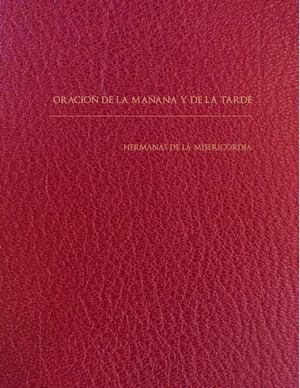
The conflicts and sufferings of our world today call us to communal prayer more than ever. For almost thirty years the anchor of our communal prayer has been The Morning and Evening Prayer of the Sisters of Mercy, published in both Spanish and English in 1998. This communal project benefited from contributions from several dozen members of the Institute. A small committee assembled and edited the contributions to produce the Prayerbook we have now.
Once they learned of the project, the Sisters of Mercy in other countries also asked to receive copies. So, the initial printing was 20,000 books which were distributed to Ireland, England, Australia, New Zealand, the Pacific Islands, etc. Those of us who have visited these countries over the years have had the privilege of using the Prayerbook with sisters there.
However, something which is used daily for decades may begin to seem humdrum, repetitious, and lacking in freshness. What are some ways to refresh our use of this treasure?
The Introduction summarizes the four principles which guided its creation: praying in harmony with the church; incorporating the resources of our Mercy tradition; respecting the values of inclusive language and scriptural integrity; and providing a framework for prayer which can be adapted to various needs and circumstances.
What are some ways to refresh our prayer, while remaining faithful to the four principles? I reached out to the original editorial committee—Sisters Ginger Andrews, Mary Jo Baldus, Sheila Carney, Katherine Doyle, and Alice M. Swartz—for some suggestions. They were generous with their responses, so I have tried to summarize their input in the following categories.
Reflection and faith-sharing.
Pausing for a few minutes of contemplative silence after the reading can also provide an opportunity for sharing. Perhaps a word or phrase that resonated with you or an observation about the relevance of the text for today. Just cultivating an unhurried attitude can promote individual and collective reflection.
Music
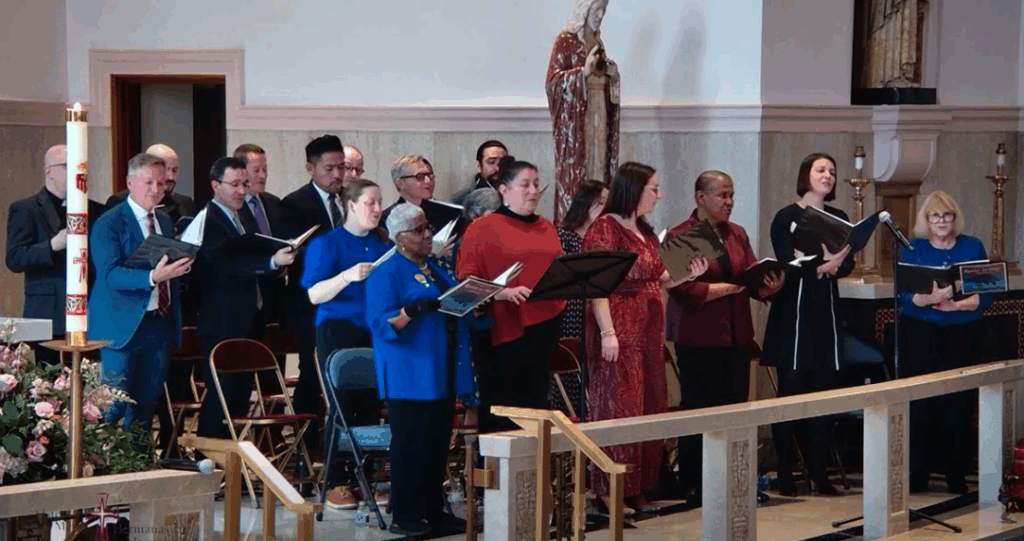
This depends in part on the size of the group. A larger group, especially if there is an organist or pianist, has many options. Singing a hymn relevant to the feast or season sets the stage for what follows. A smaller group may enjoy listening to some inspirational recorded music as a way to settle into a prayer mode.
Readings
Here the options are multiple. For example, there are readings from Catherine McAuley and other sources offered on pp. 878-958. Catherine McAuley’s reflection on “Sweet Mercy” might be just what a group needs on a particular day! A selection might also be taken from our Constitutions or from the weekly message from Mercy leadership in Mercy Now. Another option might be something from one’s current spiritual reading that you would like to share or even something from the daily newspaper which calls us to urgent prayer. (Alternate psalms and canticles relevant to a feast or season are also suggested on pp. 967-8.)
Intercessions
In reading the intercessions decades after they were written, and before the Critical Concerns were articulated by Institute Chapters, one is still struck by how relevant they are. In addition to those offered in the text, it is a good custom to allow for spontaneous petitions, for example for the “conflicts and sufferings” of today’s world, for community and Institute projects, for our recently deceased sisters, and for the personal needs of those present.
Daytime and Night Prayer
These are two resources that are probably seldom used. However, they may be welcome alternatives on occasion. For example, in one local community where I lived, we ended our occasional evening community meetings with night prayer, rather than the usual evening prayer.
Other Suggestions
The commemorations of the saints which are offered may become routine over time. A way to refresh them might be to include a reading about the life of that saint or a selection from the individual’s writings. For newer saints, one could use the prayer from the day’s liturgy. A way to refresh the Scripture readings or psalms might be to occasionally use another translation.[i] This might also be a way to strengthen our identity as an intercultural and international community.
Reading over all these suggestions may stimulate the creativity of your local community. Some suggestions would require preparation, song or an alternate reading or prayer to enhance the day’s focus. Other options could be spontaneous and flow naturally from the structure of the Prayer.
Above all, any effort to refresh and deepen our communal prayer is about refreshing and deepening our identity as part of the worldwide community of Sisters of Mercy, Associates and Companions. The investment of time and attention will ultimately enrich our common heritage as women of Mercy.
Endnote
[i] The following books offer some alternative psalm translations:
- Kathleen Deignan, ed., Thomas Merton: A Book of Hours (Notre Dame, IN: Sorin Books, 2007).
- Kathleen Deignan and Libby Osgood, eds., Teilhard de Chardin: A Book of Hours (Maryknoll, NY: Orbis, 2023).
- Nan C. Merrill, Psalms for Praying: An Invitation to Wholeness (New York: Continuum, 2007).
- Eugene Peterson, trans., The Message. The Bible in Contemporary Language (Colorado Springs, CO:NavPress, 2005).