
We know the scene: Mary is seated in a room sparsely furnished.
The Angel Gabriel stands before her, they bend towards each other in greeting, their hands folded across their bodies in a sign of humility and mutual respect.1 There is a stillness here that belies the dramatic action that unfolds. We know the question: Mary is asked to bear the Logos, to enflesh God’s word of mercy into the world. We know the answer: Mary courageously announces, I am the Lord’s servant . . . May your word to me be fulfilled” (Luke 1:38). She is overshadowed by the Holy Spirit and in this experience of illumination and empowerment, her life takes on a significance and meaning she might not have imagined. She becomes the Mother of God, the Mother of Mercy and takes her place in the story of Incarnation of Christ and the salvation of the world.
The paintings of Mary and the Annunciation are among the most revered devotional images in the Christian tradition. Today, the beauty of these images may be timeless, but the setting of Mary amidst ancient cloisters, serene gardens, and the company of winged messengers seems to bind us to a time that is past, with the effect of framing the Incarnation as something that happened long ago. Some scholars lament the passing of a visual literacy, important for understanding these devotional images, as an impoverishment of the Christian tradition and life. And while there’s some truth to their claims, there’s an equally significant concern at hand: the need for images of Mary that fit into our time, images of Mary that find a foot hold in the everydayness of our lives and the beautiful, messy, uplifting and heartbreaking realities of our world. We need images that bring the Annunciation into our world, to shape our perception to behold the “now” of the Incarnation, to see, to hear, and to respond to the call to bear mercy into the world. We need these images of the Annunciation because images are more than illustrations; they are symbolizations of beliefs, emotions, and ideas that draw us into the experiences of faith that escape words, for as Margaret Miles has observed, “Images orient communities, not only conceptually but also affectively, to the reality that creates and nourishes, in solitude and community, human life.2
While there is a history of Mary in the Christian church, we have limited access to the historical person of Mary, Miriam of Nazareth,3 what we do have are interpretations of her story and of her significance for the Church. The images we see as traditional representations of Mary are interpretations of her story, and, at times, innovations of scenes that artists created: they drew from scriptural narratives, imagined settings for stories, added symbolic elements to deepen meaning, and interpreted all of this through the experiences and cultural realities of their day. Accordingly, Marian devotional images are symbolizations that operate within a web of multiple meanings: these images integrated stories from the scriptures, sacraments, prayers, rituals into the experience of viewing and helped to shape the spirituality of believers as well as the Church at that time.
We can see this symbolizing dynamic at work in the interpretations of Mary and the scene of the Annunciation that have developed over time: a visual tradition far more complex than this essay can explore. That noted, we focus on one image, the fresco of the Annunciation at San Marco in Florence, to gain some sense of the dynamic symbolic reality of these devotional images, before reflecting on a contemporary interpretation Patty Wickman’s Overshadowed.4
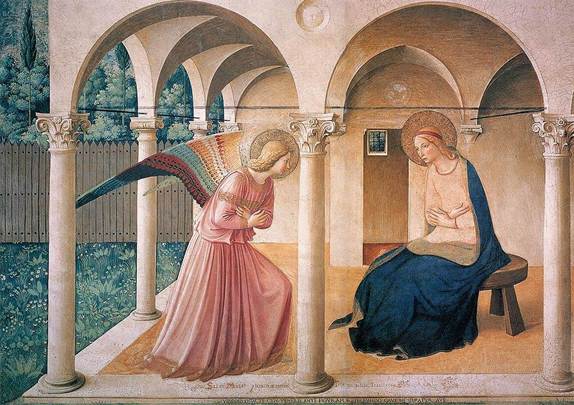
Figure 1. Angelico – Annunciation – San Marco north corridor
This painting (above) of Mary and the Annunciation (1440-1450) is but one of the frescoes that Fra Angelico and his associates painted for the Convent of San Marco in Florence. The devotional image is inspired by the narrative in Luke’s Gospel (1:26-38): a scene we are familiar with and one that characterizes the medieval and renaissance treatments of the story. When Mary queries how she could possibly conceive and give birth to God’s Word of Mercy the angel answers, “The Holy Spirit will come on you, and the power of the Most High will overshadow you. So the holy one to be born will be called the Son of God . . . . I am the Lord’s servant,” Mary answered. “May your word to me be fulfilled” (Luke 1:34-38). Then the angel left her. Angelico’s depiction of this moment teases out the intimacy of this experience, while placing it in the cosmic drama of Salvation.
The modern viewer may interpret Mary’s consent, here, as a passive submission to God’s will, thus missing the intense drama of this moment. Here, Mary freely becomes the Mother of God, the Mother of Mercy, the co-redeemer of humanity, enfleshing the divine redeemer who will save humankind from sin and eternal death. She is seated on a simple chair in a loggia, that opens up onto an enclosed garden, a feature common to cloisters and some medieval structures, and often alluded to the mystical text of the Song of Songs, a focal point of late medieval spirituality extolling Mary’s virginity (Song of Solomon 4:12). The Holy Spirit is seen hovering over Mary, faintly visible at the top of an arch in the background. Overshadowed by the Holy Spirit, Mary becomes the mother of the Incarnate Word – God’s Son sent to save humanity from sin. The beholder would engage this devotional image through a complex web of meanings and practices that enriched a participatory visual engagement. Fra Angelico included a small inscription at the base of the fresco admonishing the friars: “As you venerate, while passing before it, this figure of the intact Virgin, beware lest you omit to say a Hail Mary.”5
Leah Buturain Schneider notes that “The visual was a prompt to action. Indeed, visual and material culture in San Marco in general are intended to yoke heart, mind, and soul to devotion and obedience, to write the word on their hearts as the faithful entered the time and space of eternity that the paintings invoke.”6 Schneider proposes that in these devotional images of the Annunciation, Mary, obedient to God’s call and overshadowed by the Holy Spirit becomes the site of incarnation, the site of salvation.”7 The beholder is invited, through prayer and imagination, to become “like” Mary, to experience the overshadowing of the Holy Spirit that leads to incarnation and illumination. Suzannah Biernoff writes that it was believed that Christian spiritual practice of visual devotion could effect a physical and affective transformation – leading to the Imitatio Mariae, because perception was connected to participation: “When we perceive something it becomes part of us.”8 Therefore, to enter the space between the bodies of Mary and Gabriel, and through this visual participation/internalization of the overshadowing of Mary, the beholder hoped to become, in her own time, a site of salvation, capable of bearing grace and the mercy of the incarnation into her own world.
We are separated from the world of Fra Angelico and the painting by over five-hundred years of history, we live in a vastly different cultural reality, and in a world where the secular has overtaken the sacred. What to make of this desire for spiritual transformation that informed the practice of reflecting on and praying with a devotional image like Angelico’s Annunciation?
Recovering the model of Mary in the Annunciation, for our day, involves some critique of the patriarchal cultural conventions preserved in the images and scriptural text that belie the authority and prophetic significance of Mary’s actions.9 Equally important is to consider the meaning of “overshadowed” to understand the significance of the Incarnation for believers today. Studying the concept as it appears in both the Old and New Testament, Johnson notes that “Overshadowed always means the Spirit of God drawing near and passing by to save and protect.”10 With regard to Mary in the Annunciation, Johnson proposes that the term “overshadowed” places this woman in deep attentive relation to the Spirit of God. Mary belongs in the company of those whom Spirit-Sophia approaches: “From generation to generation’ she enters into holy souls and makes them friends of God and prophets.”11 Translating these expectations of spiritual practice and transformation for the twenty-first century, Johnson frames this participation in the story of Mary and the Annunciation as a call to discipleship. “Luke is depicting Mary here as the ideal disciple, whose chief characteristic is hearing the word of God and keeping it, doing it, acting upon it, responding to it, this being the model for both men and women disciples.”12
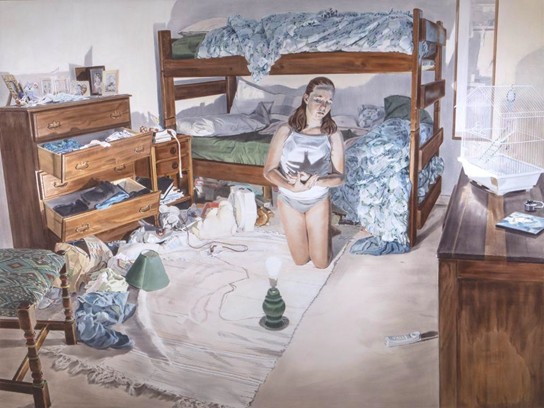
Figure 2. Patty Wickman, Overshadowed, 2001. Oil on Canvas.
We know the Scene: The rumpled bed, the hanging drawers, the young girl surrounded by scattered clothing and possessions.
How often have we beheld this scene in the bedroom of a daughter, a niece, a college dormitory, or perhaps even in one’s own room? Mary is found, not in some beautiful garden or room, but kneeling in the chaos of ordinary existence. Now is the Annunciation . . . We know the question . . . What will be her answer?
Patty Wickman invites us to see the Annunciation, anew, through a woman’s experience grounded in the everyday realities of life. Gary Brewer writes that her paintings have the power to “reach back into the past to retell our myths and beliefs. She uses a cinematic sense of framing and fragments of narratives to open new pathways of meaning.”13 We see this power in her painting of the Annunciation: Overshadowed (2001) and we are moved through an ancient story to the ‘now’ of the Incarnation. Encountering Mary and the Annunciation in this everydayness of our own time, we are stirred to wonder how do we see and understand the meaning of Mary for our day, and to ponder what it would mean to be overshadowed by the Holy Spirit.
Patty Wickman grew up in a Catholic family and in the vibrant Catholic culture of rituals, sacraments, liturgy, and a dynamic tradition of art. There is a spiritual dimension to her painting that reaches beyond the canvas into a deep experience of presence and meaning, a dimension that bears witness to the sacramental imagination that infuses all of creation with the possibility that the finite can bear the infinite. Wickman graciously agreed to an interview14 for this article, and we discussed her vision and the process involved in composing her painting Overshadowed. There are two focal points I’ve drawn from our conversation that enrich the engagement with the painting: The figure of Mary, and the staging and composition of the scene.
Preparing to paint Mary, Wickman developed a series of photographic studies to explore the subject. Using her niece as a model for Mary, she explored the physical gestures of the inner psychological state that Mary would have experienced in the encounter with the Angel. Wickman notes that in her preparation for capturing this emotional experience she drew not only a “close reading of the biblical text, but also from 15th century sermons given by Fra Roberto Caracciolo in which he distinguished five successive psychological states of Mary in the unfolding mystery of the Annunciation. These included disquiet, reflection, inquiry, submission and merit. His analysis, and that of other preachers at the time, informed much of the visual iconography of 15th century and subsequent depictions of the Annunciation, including Fra Angelico’s paintings.15
We see these inner states expressed through Mary’s facial and physical gestures, the emotions capture us and become a touchstone for the viewer. Clothing Mary in undergarments, not in the rich robes seen in traditional renderings of the scene, introduces a radical vulnerability in this moment, as Mary thinks deeply, about the life that lies before her. Seized by the question, the young woman becomes the still point in a very busy room,
The chaos of the room is the counterpoint to the figure of Mary. Wickman plays with the typical conventions of the Annunciation scene. The winged angel has been replaced by the phone lying on the floor. The bare walls of the bedroom echo the sparse setting of a loggia or cloister cell. But there is more going on here than an interpretation of conventions. There is an interplay of light and shadows that purposely focuses our attention, as Wickman notes:
“I was also thinking of the shadow that’s cast on the girl’s upper abdomen as resembling a bird, possibly a dove. That the shadow is created by her hands being clasped in a gesture suggestive of prayer, involving active participation on the young girl’s part in the act of creating hand shadow images, and through the interplay of the light of the bare bulb (Christ also being ‘the light of the world’), was important to me. In other words, I wasn’t so much thinking of the light as a literal device to carry the Holy Spirit, but the light serving as a symbolic vehicle for engagement with the divine and participation in the life of the Spirit.”
The left side of the room is weighed down with chaos and clutter and certainly subverts the orderly atmosphere of an enclosed garden. Discussing the scene with Wickman, she noted that there is a subtle visual motion that informs the scene. Starting with the lamp, there is clockwise movement that carries one through the chaos, into Mary, into the experience of the overshadowing of the Holy Spirit and then into a sense of order that emerges as we continue that movement to the relative calm of the right-hand side of the image. There is the subtle ordering out of chaos that animates the scene, as Mary’s acceptance of this call begins to order her existence in ways that she had not imagined.
What insights might we gain from the experience of profound presence mediated by the painting and its scene? Gary Brewer has said it best: “To paint is an act of faith. It is the belief that one can transform humble matter into a language of the soul that will endure through the ages and express some elemental truth about our existence. It is an effort that we see in these paintings, to capture that moment when a gesture becomes a story that holds the human heart and soul in the light of mind.”16 In her painting Overshadowed, Patty Wickman invites us into beholding the scene of the Annunciation as it might unfold in our world. The gesture of Mary, kneeling in the chaos of her room, in the swirl of emotions, in all her vulnerability offers us this insight: the Word will probably not come to us via a winged messenger who finds us secluded in a garden and lost in deep thought. The Holy Spirit will find us in whatever chaos we are planted. Therefore, we need to have the vision and heart to recognize the invitations extended to us by ordinary people in ordinary circumstances, who may be calling us to the extraordinary. We need to recognize, as Johnson writes in her reflection on the overshadowed that:
“The Holy One calls all people, indeed all women, and gifts them for their own task in the ongoing history of grace. In the midst of family, work, and social life in village, suburb, and city, it begins with an encounter in the solitude of the heart before God; everywoman, the voice, the call, the courageous response, in the context of a world struggling for life.”17
Amen!
Illustrations
Figure 1. Fra Angelico The Annunciation, Public Domain; see Wikipedia
Figure 2. Patty Wickman, Overshadowed (2001)
Image: Patty Wickman (American, 1959–), Overshadowed, 2001. Oil on canvas, 78 × 104 in. Collection of Howard F. Ahmanson Jr. and Roberta Green Ahmanson. Artist granted permission for use.
Notes
- This essay is inspired, in part, by the poem Annunciation by Denise Levertov. I have borrowed this phrase, “We know the scene,” found in the introductory lines of her poem found on her “Abiding in Hope” website, available at https://abidinginhope.blogspot.com/2014/12/poem-denise-levertovs-annunciation.html. ↩︎
- Margaret Miles, Image and Insight: Visual Understanding in Western Christianity and Secular Culture (Boston, MA: Beacon Press, 1985), 4. ↩︎
- Elizabeth A. Johnson, Truly Our Sister: A Theology of Mary in the Communion of Saints (New York, NY: Continuum, 2006), 137-208. Johnson offers a picture of the world that Mary – Miriam of Nazareth inhabited through reviewing studies of the economic, political, social and religious contexts of first century Palestine under Roman occupation. ↩︎
- Patty Wickman is a Professor Emerita of Painting and Drawing at the University of California, Los Angeles. https://www.pattywickman.com/cv. Image notes that “Patty Wickman is a painter who creates haunting scenes—and we mean haunting in the old-fashioned sense: suffused with awe and transcendent mystery. She combines pictorial realism with two related concerns: close observation of human psychology and an abiding sense that psychology must be complemented by something else, something that can only be called spirituality.” “Patty Wickman,” Image: Art, Faith, Mystery site, accessed November 3, 2024, https://imagejournal.org/artist/patty-wickman/. ↩︎
- Charlotte Poulton, Renaissance through Contemporary Art History. Utah Valley University https://uen.pressbooks.pub/arth2720/chapter/fra-angelico/. ↩︎
- Leah Buturain Schneider, “Site and Insight: Picturing the Annunciation as a Model of Imitatio Mariae in Medieval Devotional Practice,” Magistra Journal (Summer 2016), 71. ↩︎
- Schneider, 70. ↩︎
- Suzannah Biernoff, Sight and Embodiment in the Middle Ages (New York, NY: Palgrave Macmillan, 2002), 100. ↩︎
- Johnson, 247-258. ↩︎
- Johnson, 24. ↩︎
- Johnson, 254. ↩︎
- Johnson, 255. ↩︎
- Gary Brewer, “Studio Visit: Patty Wickman,” art and cake, October 6, 2019, https://artandcakela.com/2019/10/06/studio-visit-patty-wickman/. ↩︎
- Patty Wickman (artist) in video conference with the author, October 2024. ↩︎
- Wickman, email correspondence with the author, November 2024. Wickman noted that she gained this insight from Michael Baxandall’s Painting & Experience in Fifteenth-Century Italy: A Primer in the Social History of Pictorial Style (Oxford: Oxford Universitry Press, 1988). ↩︎
- Gary Brewer, “Studio Visit: Patty Wickman,” art and cake, October 6, 2019, https://artandcakela.com/2019/10/06/studio-visit-patty-wickman/. ↩︎
- Johnson, 258. ↩︎
Originally published by the Sisters of Mercy at sistersofmercy.org on May 13, 2025.