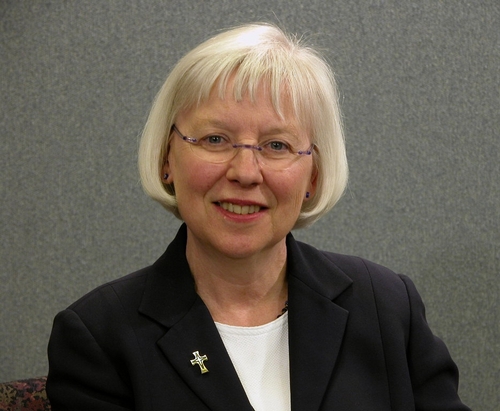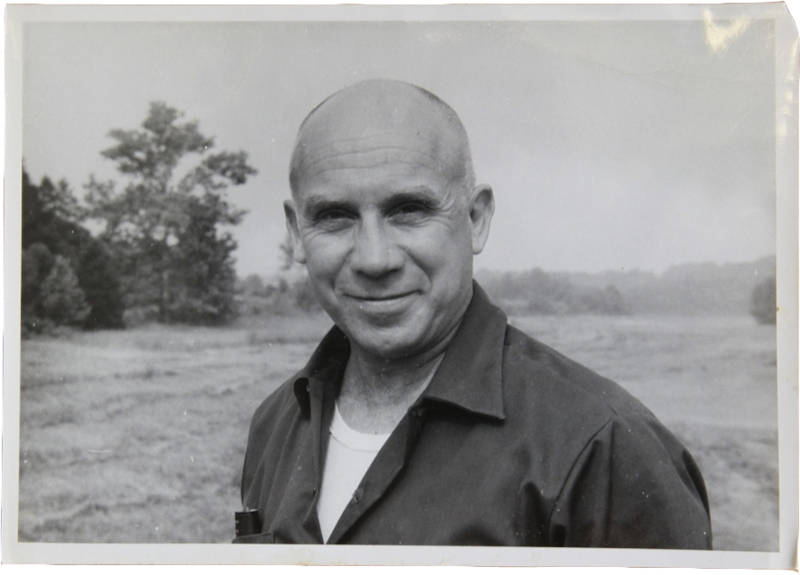

With such a title, you might think I am beginning a letter and not an essay. However, I always referred to Eloise as “dear Eloise.” When my iPhone rang and I saw that Eloise was calling, I always answered “dear Eloise,” with accent on the “dear.” I gave the same response when anyone mentioned Eloise’s name, “dear Eloise.” Keeping that in mind, I share with you a reflection on my dear friend, Eloise Rosenblatt, RSM, the indefatigable editor of The MAST Journal since the fall of 1992 and co-founder of the Mercy Association in Scripture and Theology (MAST) with Mary Ann Getty in the summer of 1987.
Eloise’s sudden death on April 14, 2025, shocked all who knew her, but it also revealed her life, gifts and work more clearly, reminiscent of Jesus’ Transfiguration on Mount Tabor. It is not my intention to eulogize Eloise or to give you a detailed biography, although that would make a wonderful project. Rather, I propose to give you some insight into this vibrant, committed, passionate Sister of Mercy who lived fully, loved deeply, and laughed often. When I saw recently that her first book, Paul the Accused,[i] was available on Amazon for a mere $1,976.00, I knew Eloise was laughing right along with me. What a delight! Priceless!
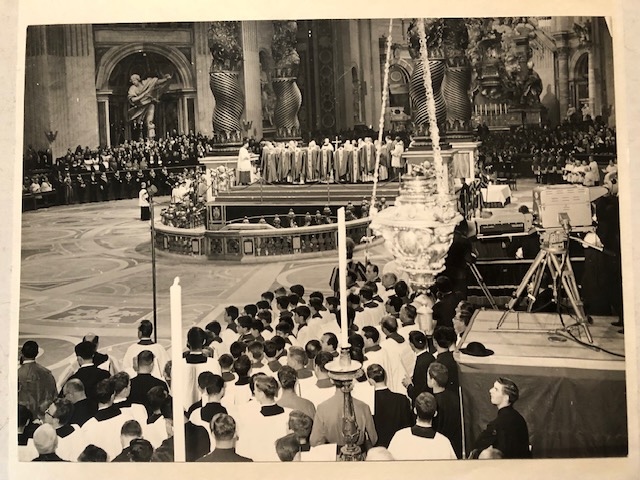
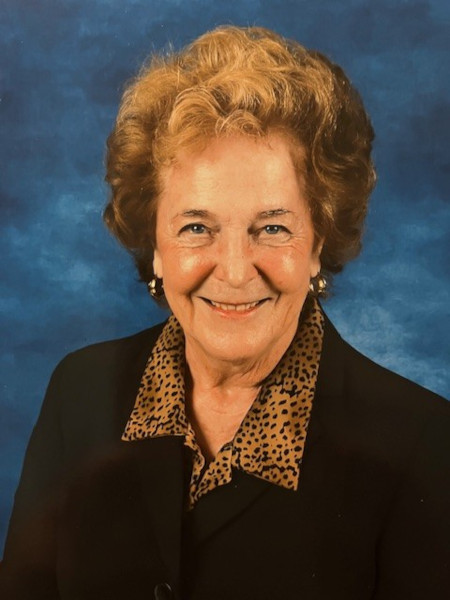 Born in Idaho but raised in the southern California towns of Hollywood and Whittier, Eloise[ii] was the eldest of six children. She attended St. Paul’s High School, a co-ed diocesan school in Santa Fe Springs, outside of Los Angeles, where she was student body president in her senior year. Later, while attending Santa Clara University, Eloise spent her junior year abroad in Rome from 1964-1965, during the third session of the Second Vatican Council. Somewhere there is a picture of Eloise standing on a pedestal, clutching a pillar to get a better view of the colorful stream of bishops entering St. Peter’s at the opening of that session. Vatican II shaped Eloise as a scholar as did the year she spent studying at the École Biblique et Archéologique Français in Jerusalem. Later you will see how all these strands can be found in her wide-ranging publications.
How Eloise hounded us to put our ideas into text, but she led the way, connecting ideas, collaborating with others, and addressing multiple audiences! She was as at home writing the most scholarly essays as she was addressing parish groups throughout the San Francisco Bay area. While I am not giving an exhaustive review of all Eloise’s work, I will point to themes she was most passionate about and how she developed them in various publications.
After a successful career teaching in high schools, colleges, seminaries and universities, Eloise began Law School and was admitted to the California State Bar in 2008, beginning a private practice in family law with a focus on employment law and elder law. She was also a certified advocate for domestic violence and served on the Restorative Justice Board for the Diocese of San Jose. It is in her last writings that her skill as an attorney and litigator comes into play.
In a donor profile on the Sisters of Mercy website, Mercy Associate Sherron Sandrini mentions making a pilgrimage to the Holy Land led by Eloise along with Mercy Associate Marian Monks.[iii] To learn more about Eloise as tour guide, I contacted Sherron who generously reflected on that pilgrimage in the summer of 1993. “Our driver was a former Israeli Air Force pilot and he wasn’t too keen on Catholics, but it was only a day or two until Sr. Eloise won him over, especially when she told him her last name was Rosenblatt! From about day three, the driver gave us the Jewish version and Sister Eloise gave us the Catholic version of all the places where Jesus walked,” Sherron wrote.[iv]
Eloise honored her Jewish heritage and included that perspective in her writings. She was particularly interested in Edith Stein who is also known as Teresa Benedicta of the Cross, a philosopher and Carmelite nun of both Jewish and German descent. Eloise wrote two book chapters related to her controversial canonization.[v] The central issue in the debate, which has continued since 1987, is why was Stein martyred? The Jewish community contends that Stein was not martyred at Auschwitz because she was Catholic, but because she was a Jew. In that respect, it appears that the Church “seemed to sweep aside her Jewishness and then both shame and attempt to proselytize Jews with the example of Stein’s conversion.”[vi] Eloise concludes that chapter by quoting Patricia Hampl who has also written in several places about the Stein controversy: “As a Catholic saint, she is folded into the canon of church history. But where she is needed is exactly where she placed herself: in between…. She should remain … a figure forever calling Christians toward contrition—the proper Christian response to the Holocaust.”[vii]
At heart a feminist, Eloise took on a variety of issues where she believed women were being mistreated or overlooked. She addressed spiritual directors, presuming most at that time were male priests, offering a corrective to how to direct women in the Spiritual Exercises of Saint. Ignatius of Loyola.[viii] She noted that since Vatican IIl adaptations to the language, imagery and process of the Exercises had been made in keeping with the needs of contemporary society. While Ignatius intended the Exercises for men and women, the result assumed that men and women had the same spiritually which, Eloise emphasized, “revealed its social and ecclesial inadequacies.” This fine essay needs to be unearthed and re-examined because there is a timelessness to it.
One of Eloise’s early collaborations resulted in the publication of Where Can We Find Her? Searching for Women’s Identity in the New Church.[ix]This volume was developed in the five years following the US American bishops’ aborted attempt to write a document addressing women.[x] Noting that the footnotes to the bishops’ first draft neglected attention to the “testimony by well-known women theologians whose articles and books shaped feminist theology during the 1970s and 1980s,” Eloise explained that Where Can We Find Her? was intended to reclaim those voices through sisterly collaboration and to serve as “a springboard for discussion in study groups.”[xi] The volume concludes with a series of questions related to each of the chapters.
Eloise’s essay “Agent or Icon: Scriptural Images and the Anthropology of Women” in the volume[xii] surfaces one particular theme echoing throughout her life and work. “Agent or icon?” could be a question appended to many of Eloise’s essays, particularly those about Mary Magdalene. On July 21, 2020, her short essay “The True Character of Mary Magdalene” was published on the website of the Sisters of Mercy of the Americas. In that brief reflection, Eloise deftly corrects the unfortunate stereotyping Mary suffered, elevating her from alleged prostitute to disciple and first witness to the Resurrection of Jesus. A similar reflection appeared in Give Us This Day on April 6, 2021, addressed to a much broader audience. There Eloise describes Mary’s personal encounter with Jesus in the garden of the Resurrection as re-centering her, emotionally grounding her so that she didn’t lose her voice: “She went back to the male disciples and reported what she saw and heard. She didn’t hold back. She spoke with energy and passion.” To me that also describes Eloise.
A final essay on Mary Magdalene which Eloise wrote was published posthumously. “Mary Magdalene, Entrepreneur: A Rich Woman Whose Business Supported the Ministry,” can be found in the August-September issue of The Bible Today (198-205). In this lengthy essay, Eloise proposes that “Mary of Magdala was a successful entrepreneur in Galilee who managed a salted-fish export business and used her wealth to support Jesus and his disciples when they were on the road preaching, driving out demons, and healing.” She documents this proposition from scriptural, archaeological, and legal perspectives—a perfect reflection of Eloise’s gifts, the threads of her life coming together at its end.
Eloise generously shared her gifts with the local church as well, as in a scripture reflection she wrote for Catholic San Francisco. [xiii] In “Remembering your greatest spiritual experiences,” Eloise recalls a striking insight from the New Testament scholar, Jerome Murphy-O’Connor, one of her professors. She explained that while the Transfiguration is usually seen as an episode where Peter, James and John have an other-worldly encounter with Jesus, “Father Jerry proposed that the Transfiguration was most fundamentally a restorative, bracing moment of spiritual renewal for Jesus himself at an anguished period in his ministerial life.” At the conclusion of the showing, when Jesus says, “Rise and do not be afraid,” he is handing on to them “the divine reassurance that has just rejuvenated his heart and mind.”
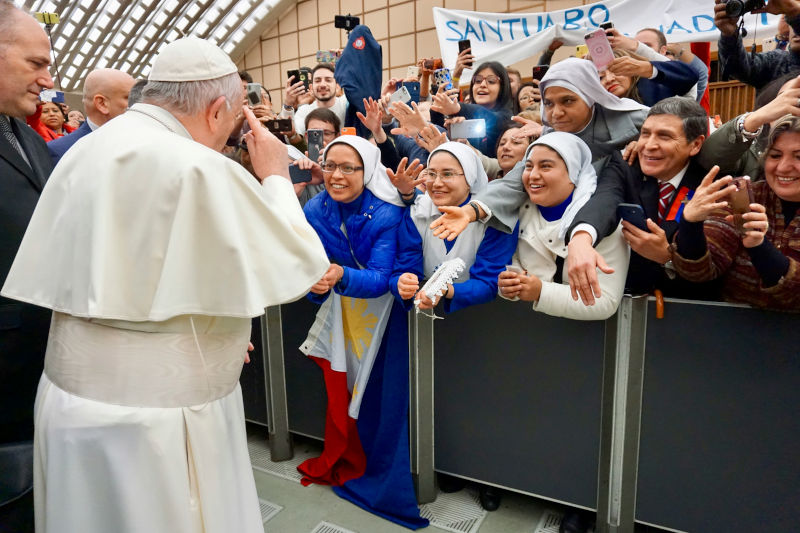
If not called “Vatican III,” the Synod on Synodality convoked by Pope Francis in 2022 was an important non-hierarchical gathering of Catholic clergy and laity meeting as equals. Volume 29.1 of The MAST Journal focused on the Synod on Synodality and “returns to the original phase, to recapture the record of the first voices of Catholics in parishes, religious communities, lay organizations, and assisted living residences—laywomen, laymen, religious women and men.” Eloise herself participated actively in that process as she reported in her essays in that volume.[xiv]
On October 30, 2024, Eloise spoke to a WINGS group at Saint Theresa Parish in Oakland, California, which was formed in 2004. WINGS stands for “Women in God’s Spirit”, and was formed in 1987 at St. Martin de Porres Parish in Yorba Linda, California, by a group of Catholic women who had just experienced the faith-enriching benefits of a RENEW[xv] program. WINGS groups sprouted up in other parishes in California and sent shoots out to the Archdiocese of Boston 25 years ago. Eloise’s topic was “Women’s Ordination and the Synod.” Rita Mitchell, co-moderator of the WINGS in that parish wrote, “I remember Eloise talking about the ordination of women and giving us hope. She was warm and engaging and captured the hearts of us all!”[xvi] That was dear Eloise!
Perhaps Eloise was most proud of her last great work, a commentary on 2 Peter in the Wisdom Commentary series.[xvii] Resulting from the collaboration of an ecumenical and interreligious team of scholars, Wisdom Commentary is the first series to offer a detailed feminist interpretation of every book of the Bible. As General Editor Barbara E. Reid, OP, explains in the introduction to the series, Wisdom Commentary’s intended audience is clergy, teachers, ministers, and all serious students of the Bible.[xviii]
Eloise provides extensive commentary on her subject, 2 Peter. Like each biblical book of the series, 2 Peter begins with a lengthy “Author’s Introduction” (pp. 101-140); followed by chapters on each section of the book (pp. 141-202); and concluding with an “Afterword” (pp. 203-207). Eloise titled the introduction to her commentary, “An Integrative Critical Model and Feminist Analysis,” noting that she was using an “integrative lens—Scripture, theology, literature, law—with an alertness to women’s presence in the text whether explicit or implied.”[xix] Second Peter, she writes, is “probably the final writing in the New Testament canon. Composed after the Book of Revelation, 2 Peter is credibly dated to between 100 and 110 CE.” “As an original approach,” Eloise writes, “I use rhetorical criticism of the pastor’s discourse but specify the forensic references and prosecutorial tone associated with Roman courts of law.” Echoes of a Scripture scholar, attorney, student of history and comparative literature – particularly Midrash, archaeologist, and sincere feminist are heard throughout. It is a stellar accomplishment.
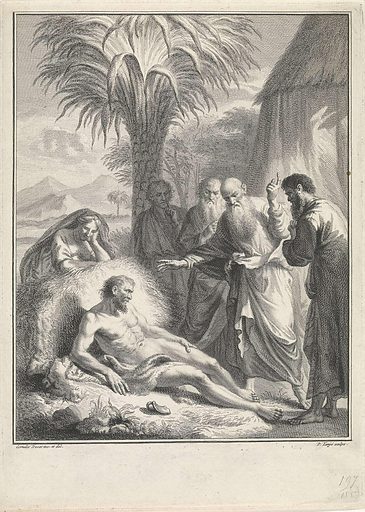
The last email I received from Eloise arrived on Friday, March 21, 2025. She wrote in response to my reflection that morning in Give Us This Day. “What a lovely surprise to read you in This Day—and on the very day of the [MAST] Editorial Board Zoom.” Eloise wrote that she had given a reflection on the same pericope, Dives and Lazarus (Luke 16:19-31), to begin the meeting that day. She included a copy in the email to me, adding, “I’m basking in the synchronicity!” That was the last Editorial Board meeting Eloise attended; three weeks later she returned home to God.
… in accordance with his promise, we wait for new heavens and a new earth, where righteousness is at home. Therefore, beloved, while you are waiting for these things, strive to be found by him at peace, without spot or blemish; and regard the patience of our Lord as salvation. (2 Peter 3:13-15)
Notes
[i] Marie-Eloise Rosenblatt, Paul the Accused: His Portrait in the Acts of the Apostles [Zacchaeus Studies New Testament] (Collegeville, Minnesota: Michael Glazier Books, 1995).
[ii] Eloise wrote about her life as a Sister of Mercy in Global Sisters Report posted on June 13, 2018 at https://www.globalsistersreport.org/column/ministry/being-nun-and-lawyer-54296. The November 2025 issue of The Bible Today also contains a lovely remembrance of Eloise written by Linda Maloney, her long-time friend and editor.
[iii] “Donor Profile: Sherron Sandrini, Mercy Associate” by Liz Dossa at https://sistersofmercy.org/donor-profile-sherron-sandrini/.
[iv] Email from Sherron Sandini to Julia Upton, November 1, 2025.
[v] Eloise Rosenblatt, “Edith Stein’s Canonization: Acknowledging Objections from Jews and Catholics,” in The Holocaust and the Christian World: Reflections on the Past, Challenges for the Future, edited by Carol Rittner, Stephen D. Smith and Irena Steinfeld (Mahwah, New Jersey: Paulist Press, 2019) 291-294; “Canonizing Edith Stein and Recognizing Catholic Antisemitism” in “Good News” After Auschwitz? Christian Faith within a Post-Holocaust World, edited by Carol Rittner and John K. Roth (Macon, Georgia: Mercer University Press 2000) 137-161.
[vi] Rosenblatt, “Edith Stein’s Canonization,” 291.
[vii] Eloise Rosenblatt, 294, quoting Patricia Hampl, “Edith Stein” in Martyrs: Contemporary Writers on Modern Lives of Faith, edited by Susan Bergman (San Francisco: Harper, 1996) 197-215.
[viii] Marie-Eloise Rosenblatt, “Women and the Exercises: Sin, Standards, and New Testament Texts,” The Way Supplement 70 (Spring 1991) 16-32.
[ix] Marie-Eloise Rosenblatt, ed. Where Can We Find Her? Searching for Women’s Identity in the New Church (Mahwah, New Jersey: Paulist Press, 1991). The text is republished with permission at https://womenpriests.org/articles-books/robla-cnt-where-can-we-find-hersearching-for-womens-identity-in-the-new-church/.
[x] The first draft of Partners in Redemption was published in April 1988 and generated grave concern particularly among women’s groups. Origins 17:45 (April 21, 1988) 757-788.
[xi] Rosenblatt, “Preface” in Where Can We Find Her? 1ff.
[xii] Rosenblatt, “Agent or Icon: Scriptural Images and the Anthropology of Women,” in Where Can We Find Her? 37-54.
[xiii] Eloise Rosenblatt, “Remembering your greatest spiritual experiences,” Catholic San Francisco, (March 9, 2017) 18; see https://issuu.com/productioncsf/docs/web_csf3-9-17)
[xiv] Eloise Rosenblatt, “Synod’s Process of Pete’s Pals—Redwood City, California,” The MAST Journal 29.2 (2023) 19-21 and “Women’s Group Lunch Discussion San Jose and South Bay Area,” The MAST Journal 29.2 (2023) 29.
[xv] Founded in 1978, RENEW International is a not-for-profit organization based in Plainfield, New Jersey, with the mission to connect faith and life through a process involving small group discussions at the parish level; see https://www.renewintl.org/about
[xvi] Email from Rita Mitchell to Julia Upton, October 31, 2025.
[xvii] Pheme Perkins, Eloise Rosenblatt, and Patricia McDonald, 1-2 Peter and Jude [Wisdom Commentary], edited by Linda Maloney (Collegeville, Minnesota: Liturgical Press, 2022).
[xviii] See “Wisdom Commentary Series” at https://litpress.org/wisdom-commentary-series/About.

image: Eloise Rosenblatt, RSM; in an email to Julie Vieira, IHM (November 15, 2023), Eloise wrote, “This was the opening Mass of the 3rd session of Vatican II September 14 1964. I got up to the base of St Veronica’s statue with the journalists so I could see.”